Sign Up


What Is Local SEO Link Building?
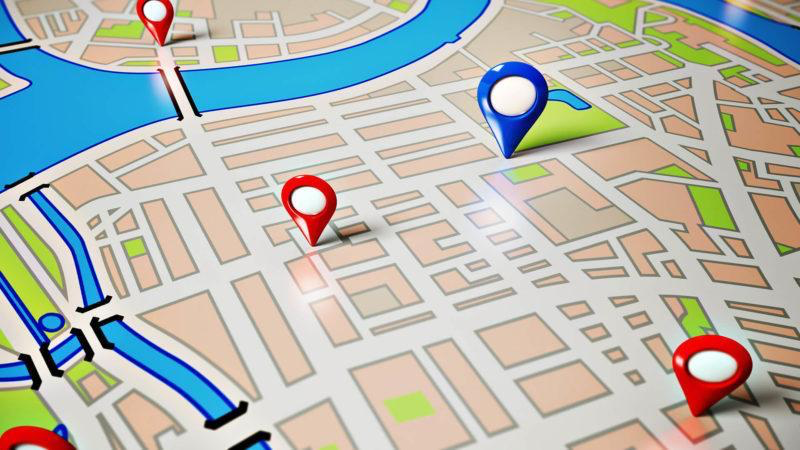
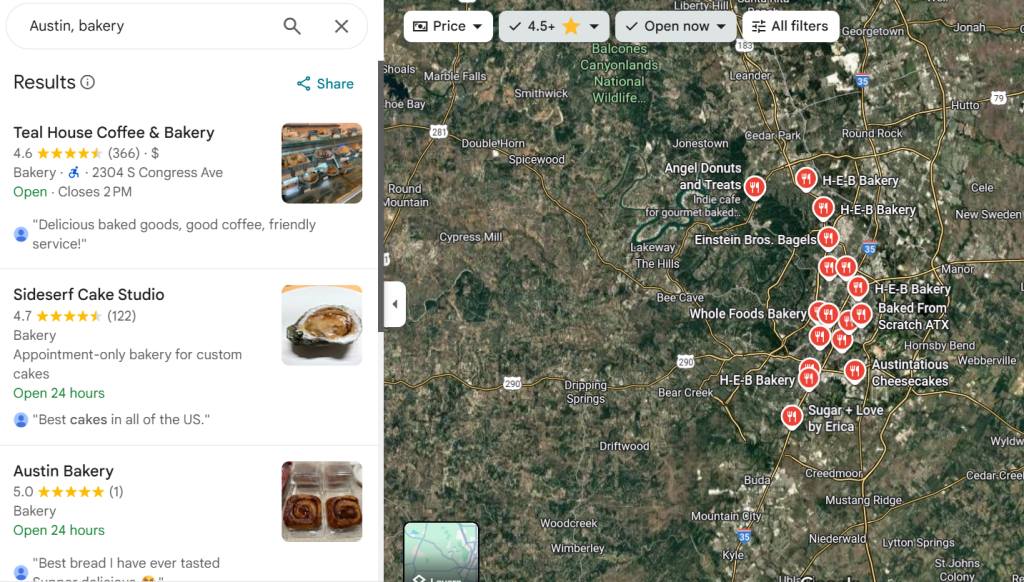
Local business link building is a set of actions aimed at obtaining backlinks from relevant local sources. These can include mentions in local news, inclusion in regional directories and tourist guides, useful sources for local residents, and collaborations with similar or related businesses. It also involves targeted work on Google Maps presence, as well as managing company reviews and ratings among local customers.
All these actions signal:
- Your presence in the region, along with your exact location;
- That other businesses and local people trust you;
- Your responsible position overall, your kind approach, and many other factors that tip the scales in your favor when people choose where to shop or where to spend their time.
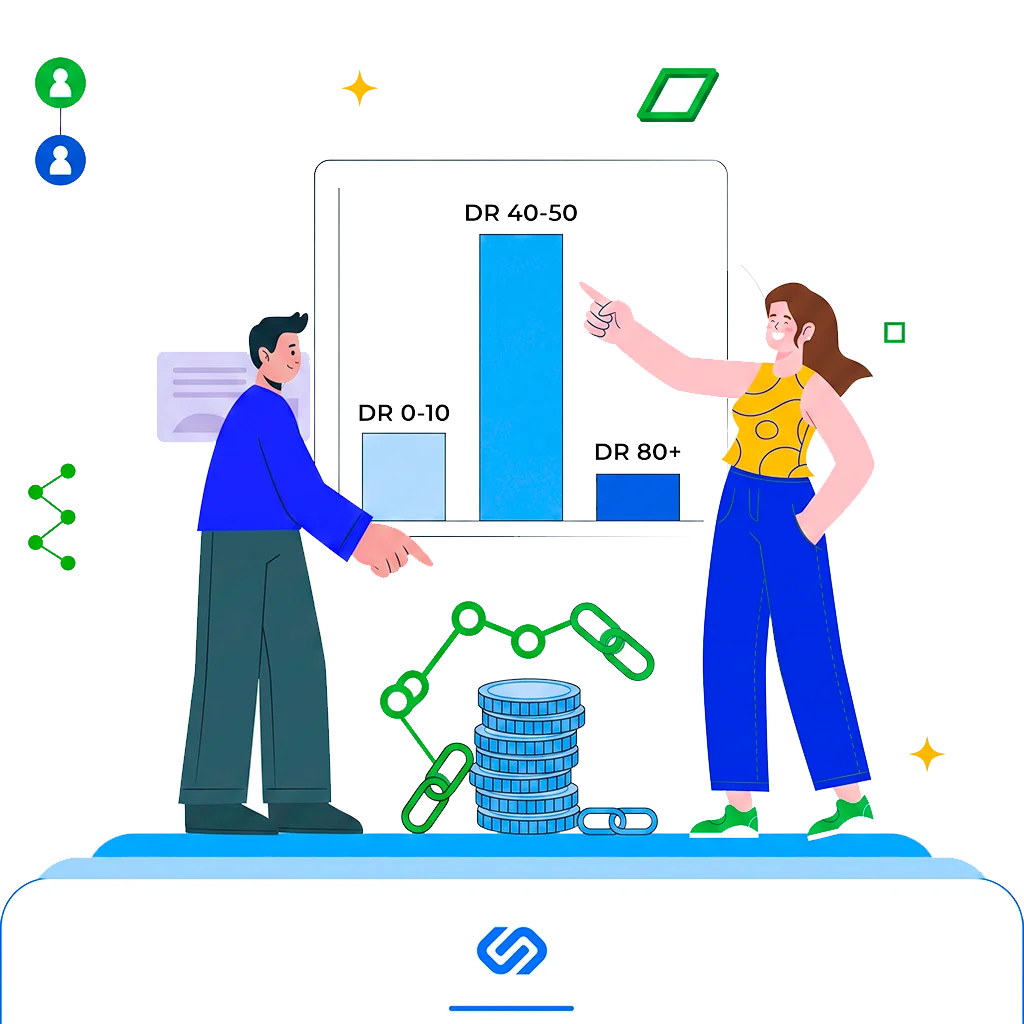
To some extent, obtaining local SEO backlinks is easier because here, you are working within a regional area, can directly communicate with partners, and can spend less money on building a quality backlink profile. Why cheaper? Because you can collaborate with local news portals, for example, which may have lower DR (domain rating), charge less for publishing mentions of your business, and some local backlinks you can get completely for free!
What’s Important?
- Focus on the quality of your services to receive as many genuine mentions as possible from local residents and related businesses.
- Take an active part in community life to get organic mentions in local media and groups.
- Pay attention to relevance when placing backlinks. Here, quality is critically more important than quantity.
Why does link building for local businesses matter?
On a global level, SEO efforts are focused on improving a website’s rankings in search engines. In local search promotion, the primary objective is to attract as many customers as possible from local residents and city visitors.
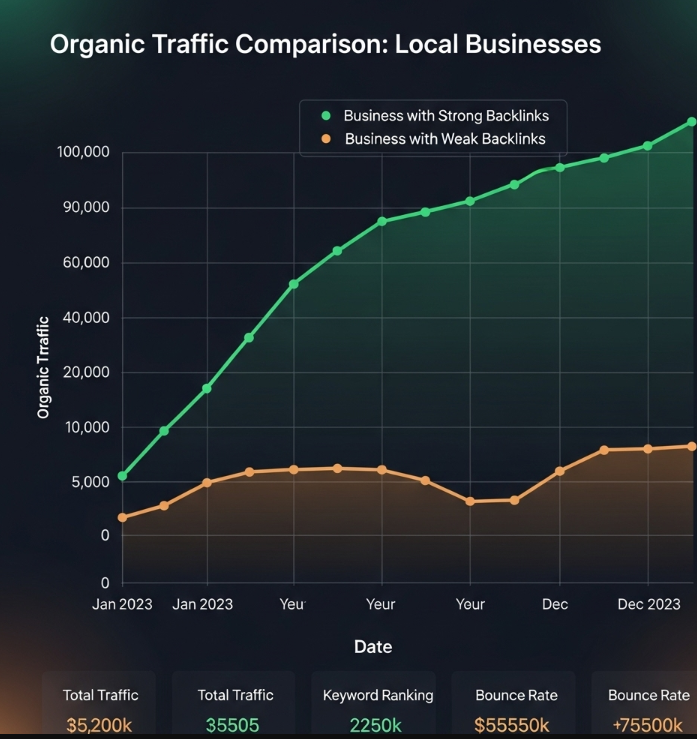
High-quality local SEO link building can allow, for example, a local plumbing company to get more clients than a nationally recognized brand with a weaker local presence. Or, for instance, a neighborhood bakery may gain more ratings and foot traffic than a newly opened McDonald’s in town.
Best Strategies for Local Link Building: Choosing Quality Sources
How to get backlinks for local SEO? Good news – there are plenty of potential sources for obtaining local SEO links. Let’s take a look at how to acquire them.
Local Business Listings
Register your business on Yelp, Foursquare, Yellow Pages, and other local business directories, including directories specific to your city. What can you share in a directory?
- Add a link to your website (thus receiving a high-quality, relevant backlink).
- Briefly describe your services.
- Provide your address, phone number, working hours, lunch breaks, and weekends so people can see in search whether you are open right now and whether they can visit you.
- Additional details: price list, offers from specialists in your company, video guides, and more.
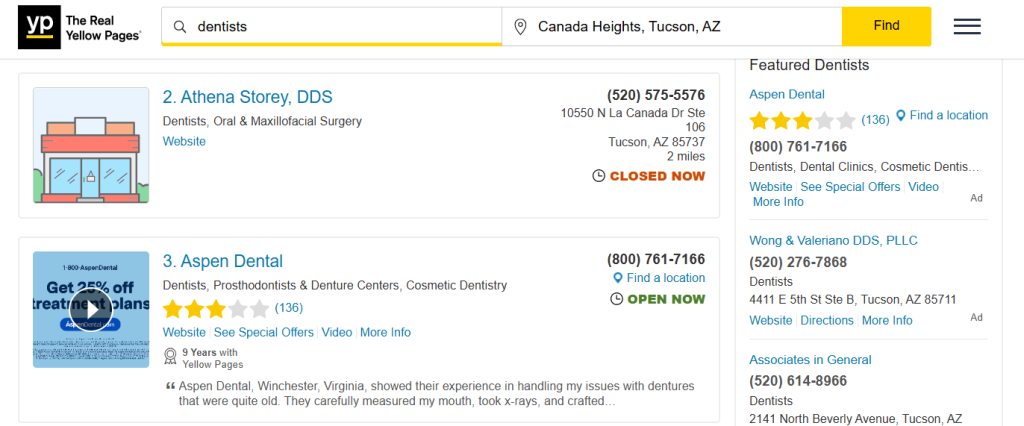
On the pages of local directories, you can also place paid ads, which will give you higher positions in the listings and make you appear first in search results. For beginners who don’t yet have enough ratings and reviews, or in cases when your rating needs to be improved, this is an ideal option.
Registration in Google Business Profile
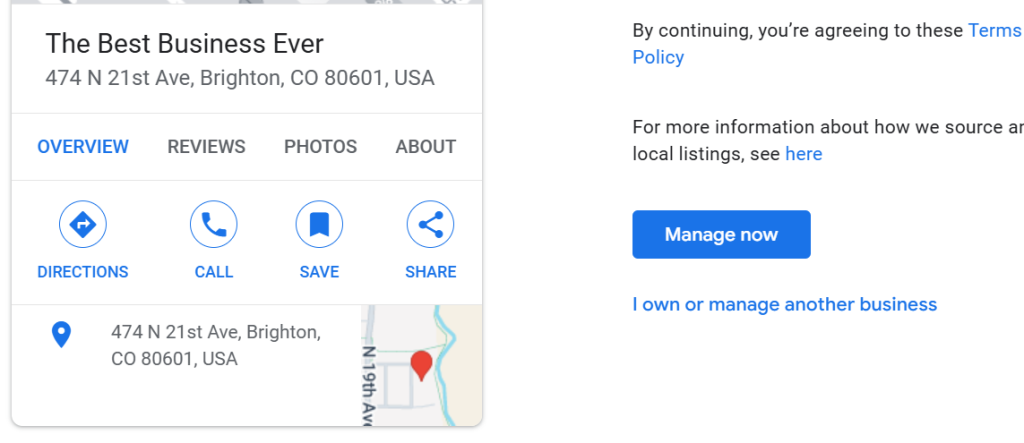
When working with Google Business Profile, the process is similar to using local directories. You register, provide your address, phone number, working hours, and description of services. You can add a price list, menu, and photos of your location (to make it easier to find you). You can also create a short portfolio right there, so that even before visiting your office or venue, a potential client understands whether you are the right fit. The more information you provide about your business in the profile, the better.
Whichever local link building strategies you choose, registering in business directories and on Google Business Profile is a mandatory step that already gives you a lot. If competition in your niche is low, or you have a highly convenient location that people can easily reach not only by car but also by public transport, these two steps alone may be enough to ensure a steady flow of customers. You will already appear on Google Maps and on the right-hand panel of search results when someone types a query like “service_city.”
Partnerships with Local Businesses
Collaborations with businesses in related or similar fields also contribute to link building for local SEO. For example, if you sell the best donuts in town and there are coffee shops nearby, that’s a great opportunity for mutually beneficial cooperation, including mentions of each other on your websites and social media. Or, say, you own a clothing store: you could successfully partner with beauty salons, makeup artists, and hairdressers. This way, you create a complete service package – beauty from A to Z – and mention each other on your platforms.
Another good option is to arrange cross-promotion. You provide a promo code or discount for another business, and they do the same for you. Each business publishes the promotion details (and links to each other’s websites) on their site, social media, and email newsletters – everyone gains useful, relevant backlinks.
Local Newspapers and Blogs
Collaborate with local bloggers and journalists. You can get the best backlinks for local SEO when they interview you, mention you positively in local news, include your info in press releases, or prepare stories about you on local TV channels.
How to Get Local Backlinks: A Practical Path
- Be an active community member. Take part in charity fairs, exhibitions, and local contests.
- Become a sponsor. For example, you can support a local rugby team, sponsor a marathon, or donate to a sports school. In return, you’ll be mentioned on the school’s website under “Our Partners.”
- Partner with other businesses. For example, if you supply fabrics, work with local sewing workshops and ateliers. This way, you’ll gain a steady client and also exchange mentions online as partners.
- Propose community initiatives. For instance, if you make wooden furniture, organize regular tree-planting events in your area. Such activities will definitely attract attention from local communities, journalists, and bloggers.
- Be a source of good stories. This gives people reasons to write about you, like: “Businessman X, owner of website Y, installed free bicycle parking in our city.”
Content Marketing for Local SEO: Guest Posts and Natural Backlinks
You don’t necessarily need a highly developed website. A simple multi-page site can work for you, helping you grow organically and stay close to your target audience. Here, the main local link building tips will come in handy.
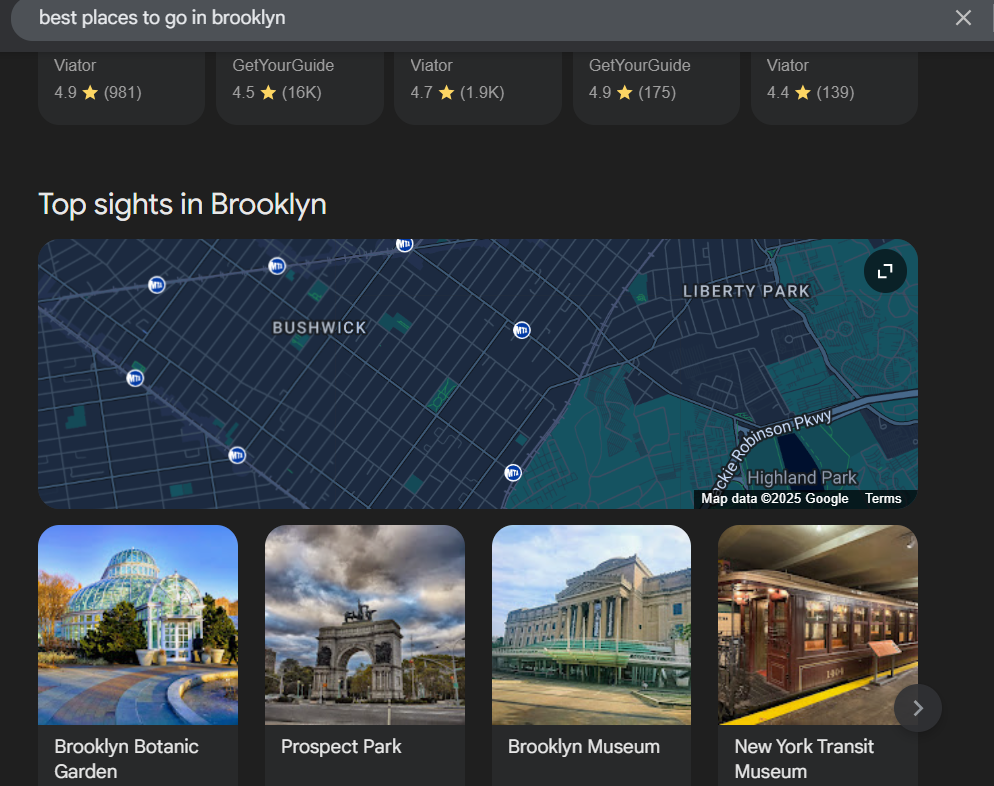
Get Featured in “Best of” Lists
Ask to include your company in guides such as “Best Places in [Your City],” “Top 10 Spots to Visit in [City],” “Where to Go in [City],” “Dentists in [City]: Who to Contact,” “Best Coffee in [City],” and so on. People browse and read such lists actively. You get two benefits in one: a backlink that boosts your site ranking and a recommendation of your company, which leads to more clients.
Write Guest Posts with Long-Tail Keywords
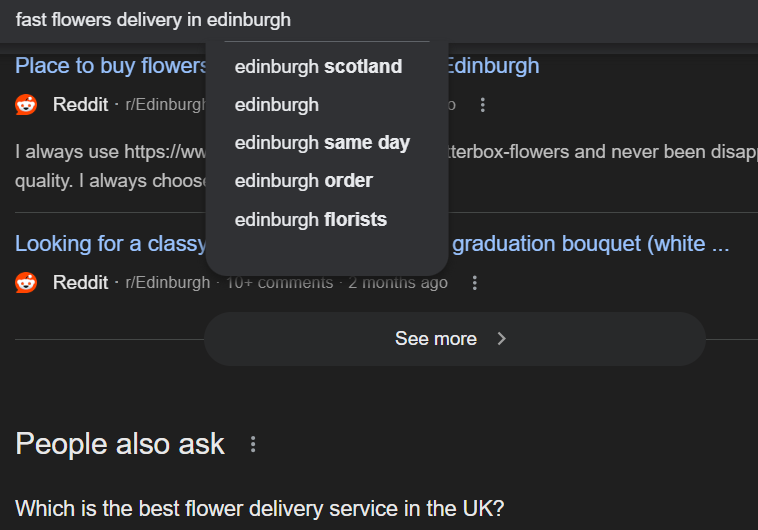
How can I adapt my link building strategy for local SEO with long-tail keywords? You might think that using long-tail keywords could scare people away, and in global SEO, that can be true. However, in local link building, it’s important to include your city name and specific location because that’s exactly how your audience will search for you. Ask to publish an article about your business on local bloggers’ sites, and include long-tail phrases specifying your location in the content. Try different variations.
Share Content Worth Sharing
Be proactive in local backlink building: create webinars, curated lists, expert reviews, and other useful materials. Publish them on your website and earn natural mentions with links to these resources. You may not directly control the number of backlinks, but this effort is far from wasted, as it benefits your website and its search engine performance.
Reviews & Testimonials
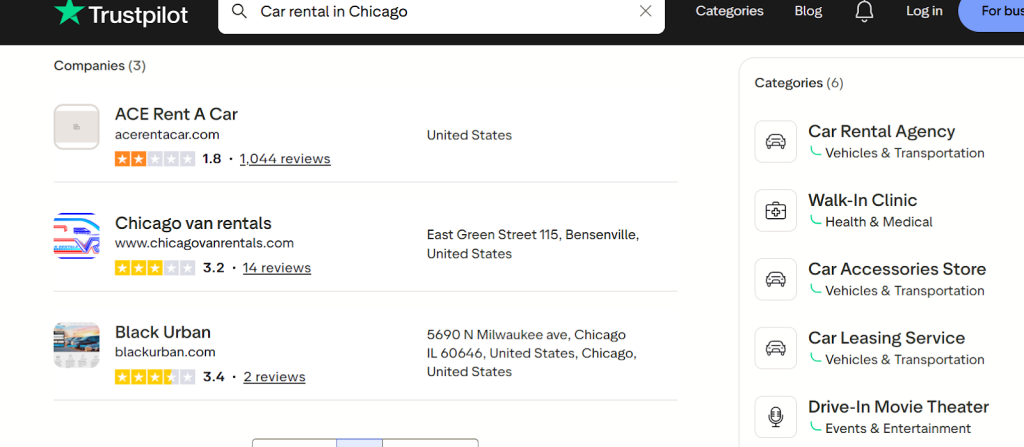
Another way to work on local SEO link building is through reviews. You can leave feedback for partners (and ask them to do the same), and encourage your visitors to share their experiences. Use real case studies and client stories: explain the challenges you addressed and how you solved them. Your client can share this material on their platforms – a win-win for both parties.
For example, if you installed solar panels or heat pumps for a company, describe exactly how it was done. Your client may repost this content or share their own feedback about the collaboration.
Social Proof & Community Involvement
Link building techniques local businesses can also implement through social media. What works well?
- Local influencer marketing. Invite local bloggers to visit your venue, share information with their followers, and include links to your site in posts or stories.
- Social media reviews. Even no-follow backlinks, such as comments under posts, can be beneficial.
- User-generated content (UGC). Creators with even small audiences (e.g., up to 5,000 followers) can help by describing your services or products and sharing their impressions, including who might benefit from them.
- Discounts for mentions. Offer your customers discounts or promo codes for future use if they post about your business on social media.
Other effective tactics include responding yourself (with a link to your website) on local forums, Facebook groups, LinkedIn, Instagram, and YouTube channels run by local bloggers.
Step-by-Step: How to Do Local Link Building
How should local businesses acquire high quality backlinks? Let’s break down the process step by step.
Start your local SEO local link building with an audit of what has already been done
To understand where to go next, you need to determine your current position. For example, you may have already registered on Google My Business and Yellow Pages. Now, you can plan placements in local niche directories and work with guest posts.
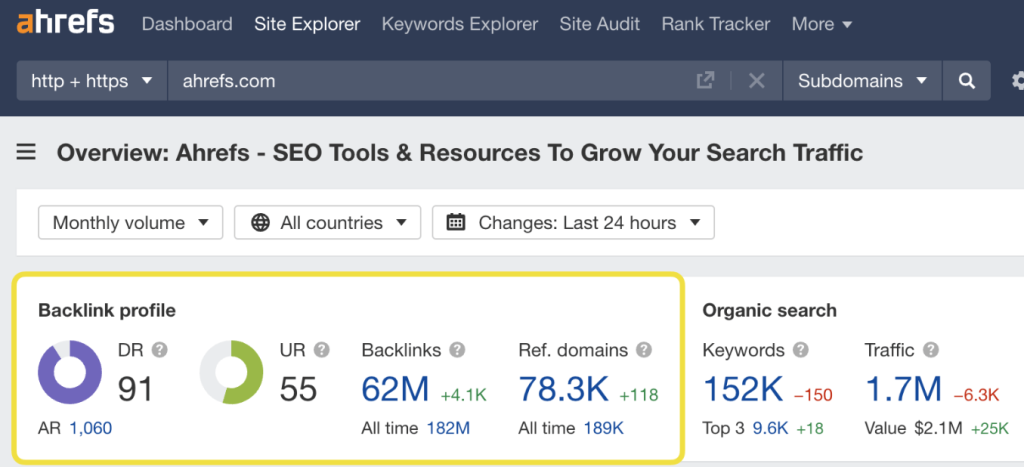
At this stage, it’s important to use SEMrush, Ahrefs, or Google Search Console to see where your backlinks are already coming from. You can also immediately disavow or remove toxic backlinks if any are found.
Make a plan for the next steps
This could look like:
- Check that all listings have correct geo-data, contacts, and working hours.
- Select relevant directories where you should register.
- Add your business to 2 new local city directories.
- Identify local events you can participate in.
- Talk to local influencers about collaboration.
- Plan participation in the next charity fair.
- Offer a guest article to a local news outlet.
- Create a curated list, e.g., “Where to Order a Birthday Cake in Brooklyn.”
Local and External Link Building – Balancing Both
It’s optimal to combine local and external link building. While local backlinks, such as those from local media, partner city websites, and business listings, work to make your business recognized in a specific region and show your geographic presence, external links help reinforce your expertise and improve your website’s search engine ranking.
For example, if you run a dental clinic, presence in a local directory helps clients find you. Meanwhile, mentions of your doctors or clinic in industry publications reinforce your level of expertise and build trust.
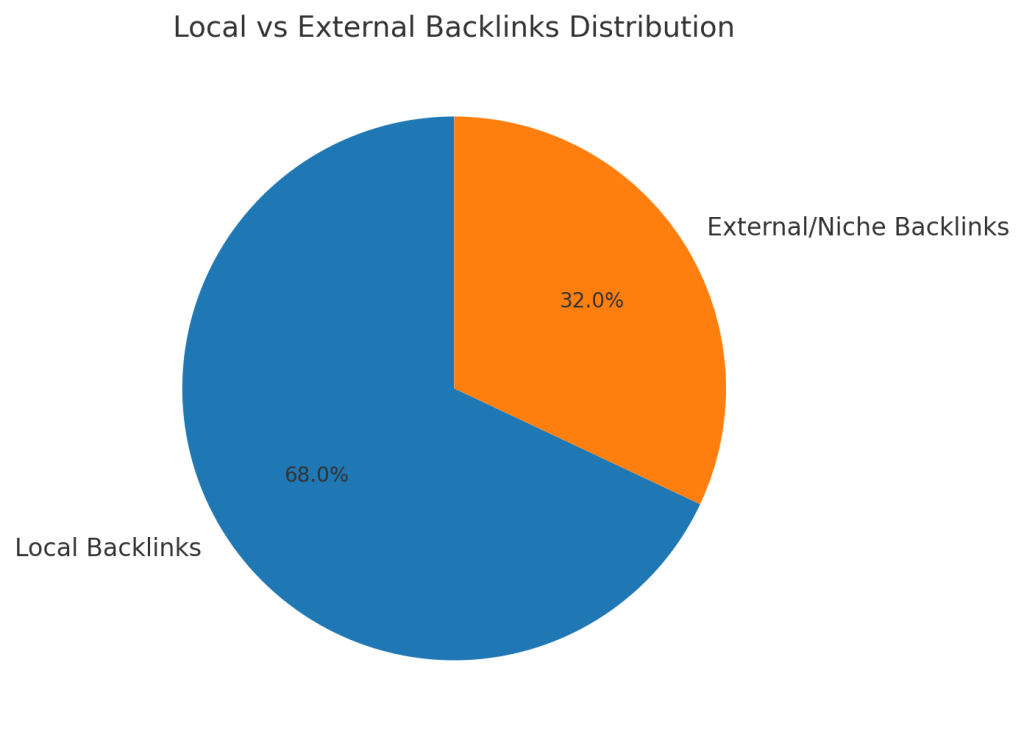
For local businesses, an optimal backlink profile balance is approximately 65-70% local and 30-35% niche or general external backlinks.
Tracking & Measuring Success
How do you know if you are acquiring quality local SEO backlinks and if everything is going according to plan? Use specialized tools, such as Moz Local, Ahrefs, and SEMrush, which provide the necessary data.
With these tools, track the following metrics:
- DR/DA (Domain Rating/Authority): Measures the trustworthiness of the referring site. The higher the DR/DA, the better.
- Total number of local SEO backlinks.
- Whether the links are active or broken.
- Your local rankings on Google, including the Local Pack and Maps results (which can be checked via Google Search Console).
- Referral traffic metrics to understand how many visitors come to your site from backlinks.
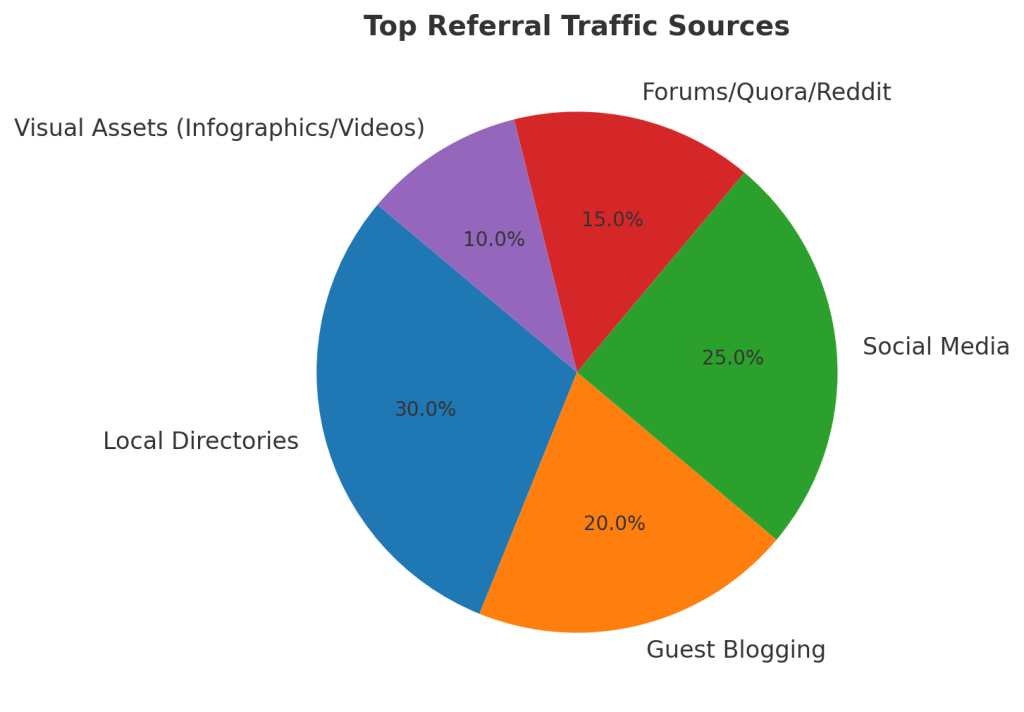
How to Avoid Toxic Backlinks in Local SEO?
Quality of backlinks for local SEO must outweigh quantity. Broken, non-functional links, or links from irrelevant or low-authority sites are harmful – at best, they don’t help, but most often, they work against your business.
Don’t Create Toxic Links Yourself
- Avoid offers like “Get 1000 backlinks for $5” – the quality will be poor.
- Look for partners within your business region. If your small cozy bakery is in Springfield, links from sites in Australia won’t help much, unless it’s from a high-authority site due to an international contest you participated in.
- Too many backlinks with identical anchor text look suspicious to search engines. Mix different key phrases, including service + city, brand mentions, and long-tail keywords. Around 20–30% of backlinks should use neutral anchors like “Click here” or “Learn more.”
And one more thing: be cautious with Private Blog Networks (PBNs). They belong to gray-hat SEO techniques. While they sometimes work, Google can penalize sites using this method.
How to Detect and Handle Toxic Backlinks from Competitors?
Collaborate and build relationships with other local businesses. However, competitors might try to harm your site’s ranking using spammy links. To counter this:
- Audit your backlink profile using the SEO tools mentioned above.
- Identify links from adult, gambling, or suspicious sites, links with zero or very low traffic, and links with odd anchor texts.
- Upload this list to Google Disavow in Google Search Console. This tells Google not to consider these links.
By doing this, you can neutralize attacks and protect your website from spam. A strong backlink profile also reduces potential harm from competitors.
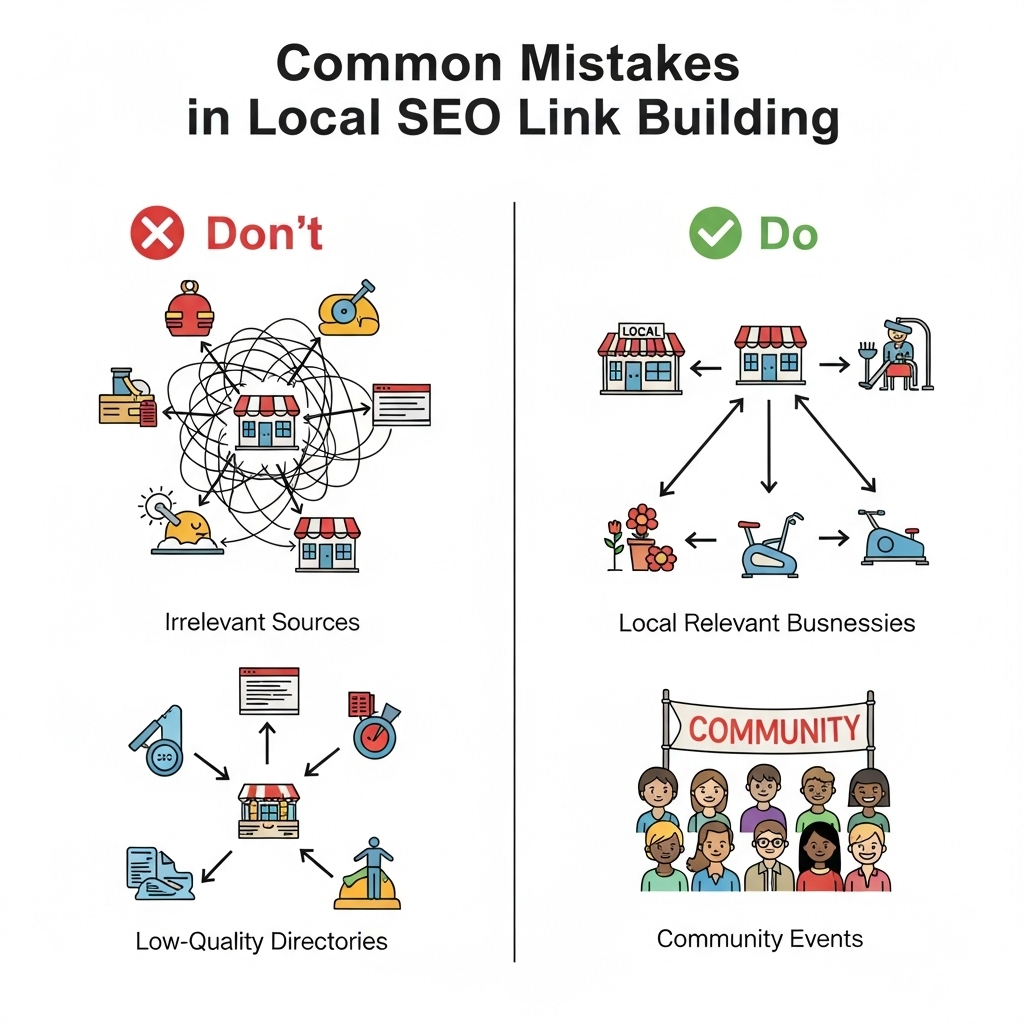
Common Mistakes in Local SEO Link Building
You already know how to do everything correctly, but to ensure that your link building local SEO is truly effective, let’s highlight once again the mistakes you should avoid.
- Falling for cheap offers that promise many backlinks quickly – this fills your profile with spam.
- Ignoring collaboration with local communities, media outlets, and micro-influencers in your region.
- Trying to do everything at once. Plan based on your resources, budget, and capacity. Regular, gradual actions are more effective than attempting all sources simultaneously.
- Ignoring community life. Participate in events in your city and local community – this provides opportunities for visibility and mentions.
- Buying backlinks from sites with unrelated topics, locations, or audiences.
Conclusion
Local SEO link building is the closest path to your customer. It affects search results, but more importantly, local SEO is less about pure SEO and more about marketing: acting to earn positive mentions about your business. This is the main difference from traditional link building for corporations or e-commerce. With the right approach, you will undoubtedly achieve success!
FAQ
What’s the very first step to start?
Start by analyzing what you already have: where you are registered (which directories) and what backlinks you have. Then make a plan for the next steps.
Which technical tools and actions are sufficient for local linkbuilding?
If you can’t yet actively participate in community life or sponsor events, you can still focus on technical aspects under your control, such as outreach (guest posts), social media work, and mentions from local bloggers and influencers.
How should local businesses acquire high-quality backlinks?
Work with local media and influencers, participate in community events, organize collaborations – use every opportunity to earn mentions and links to your website.
 ChatGPT
 Perplexity
 Claude
 Google AI Mode
 Grok
Grok