Sign Up

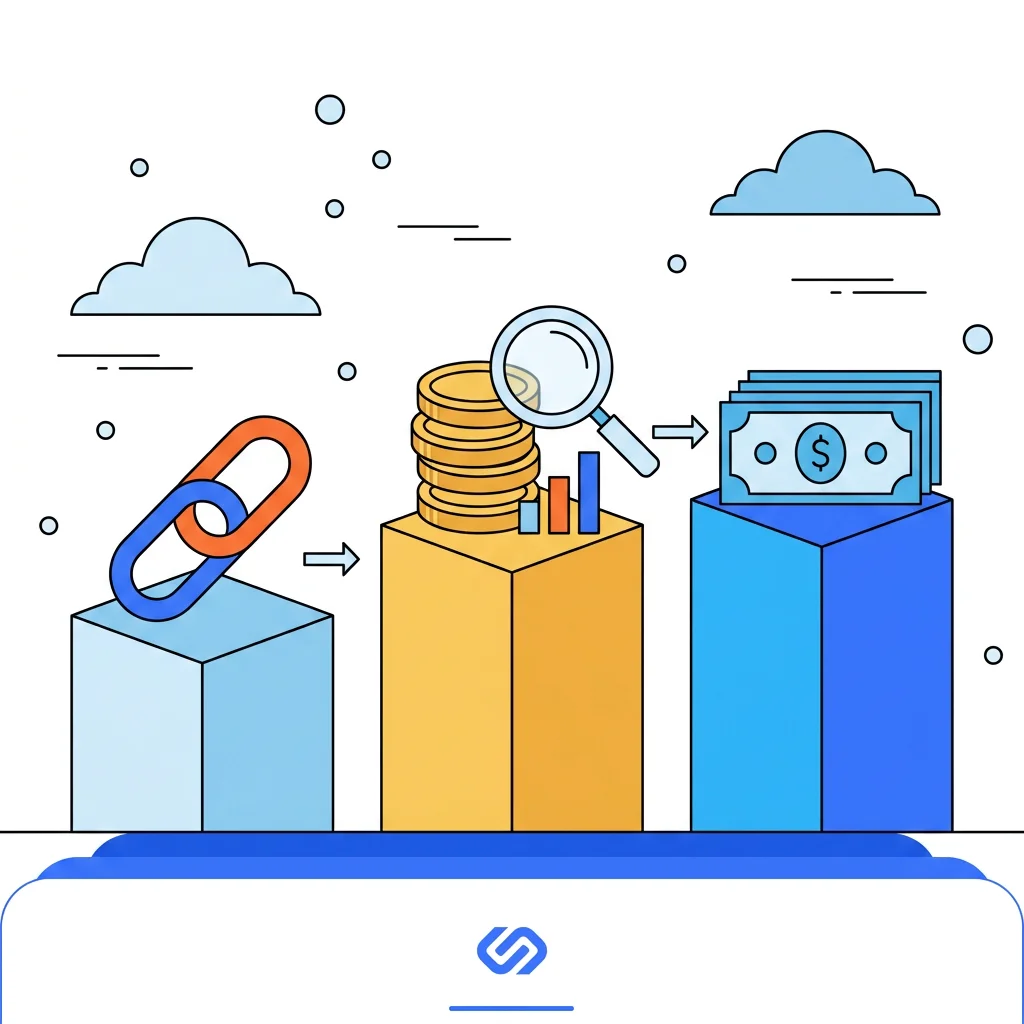
After analyzing numerous recent studies, we can give an unambiguous answer: absolutely, yes. Backlinks have not only not lost their importance but have become even more significant for rankings, domain authority, and getting into the new AI blocks. Why? Here are three main arguments:
1. Google’s Position
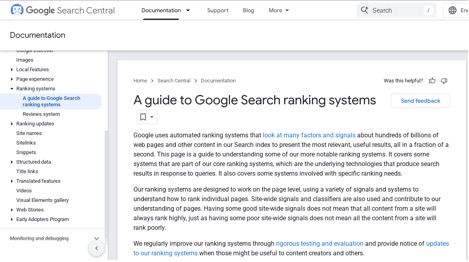
The world’s largest search engine officially confirms that PageRank is one of the fundamental algorithms of the system and an important part of its core ranking factors.
2. Independent Studies of Ranking Factors
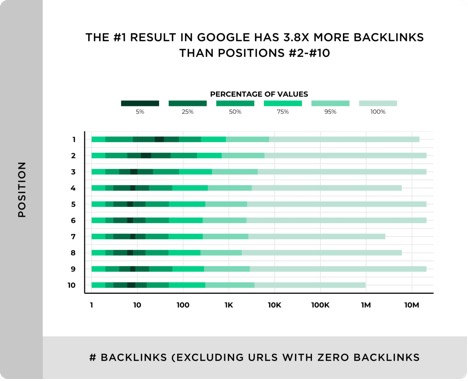
For example, in its ranking factors study based on nearly 12 million search results, Backlinko showed that on average, the #1 result on Google has up to four times more backlinks than other pages in the top 10.
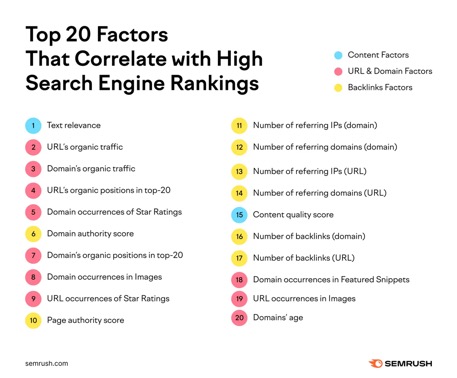
Semrush, in its Ranking Factors 2.0 study, also indicated that 8 out of 20 key ranking factors are directly related to backlinks.
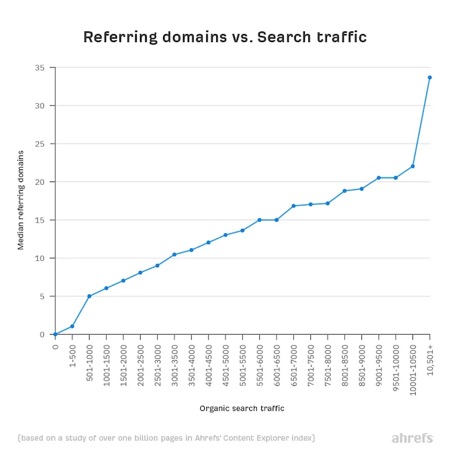
Let’s add the results from Ahrefs:
“Pages with a large number of high-quality backlinks receive significantly more organic traffic.”
3. Backlinks and AI Overview
The appearance of generative answers does not cancel the importance of links. According to SE Ranking’s 2025 backlinks analytics, in almost 62% of cases, Google AI Overview uses pages that are already among the top 100 organic results for the same keywords.
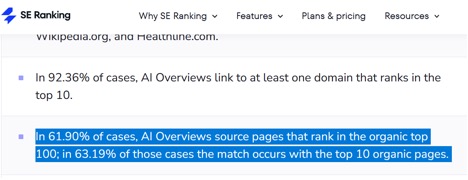
This means that websites with a strong backlink profile receive a double advantage:
- High positions in traditional search results.
- Inclusion in AI blocks, which now occupy the top part of the SERP.
What is Backlink Analysis?
Imagine you are an adventurer like Indiana Jones, trying to find the path to treasure. Without an accurate and honest map, you won’t get far. Linkbuilding analysis works similarly: it acts like a satellite image that helps create a detailed “map” of your website. This allows you to see which platforms are directing traffic to you, how authoritative and valuable they are.
Essentially, you learn where the caravans with gold are coming from and where garbage trucks loaded with useless junk are arriving from.
Search engines build their algorithms on the principle of trust: the more high-quality and topically relevant links a site has from authoritative sources, the higher its chances of achieving strong positions in search results.
That’s why regular site backlink analysis is a necessary part of any promotion strategy. It allows you to evaluate your website’s current reputation, identify growth opportunities, and quickly adapt to changes in search algorithms.
However, the value of backlink analysis in SEO is not limited to finding useful links. With its help, you can:
- Identify problematic or “toxic” sources that can negatively affect rankings.
- Check the diversity of your backlink profile.
- Verify the correct use of anchor texts.
- Evaluate the effectiveness of nofollow links.
In fact, backlink analytics is a universal tool that ensures quality control and stability of your link-building strategy.
In modern SEO, the principle of “the more links, the better” no longer works. On the contrary, a large number of low-quality mentions can cause serious harm to your website’s positions. Search engines, especially Google, are becoming increasingly strict in evaluating link sources and actively penalize sites using suspicious donor networks.
Therefore, a few organic and topically relevant backlinks from authoritative portals will bring much more benefit than hundreds of random mentions on low-value resources.
How to Check My Backlinks
When it comes to professional backlink quality analysis, there are three tools that are deservedly considered market leaders: Ahrefs, Google Search Console, and SEMrush. Each solves specific tasks and is suitable for different experience levels and promotion strategies.
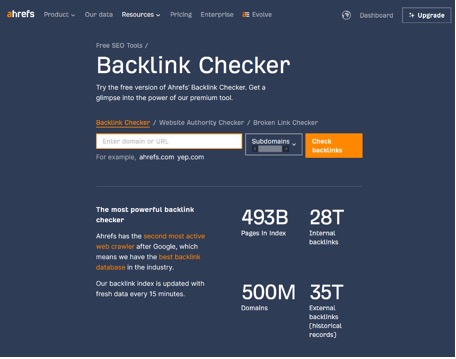
Ahrefs
One of the most powerful tools for backlinks analysis. It is known for having the largest database in the world, which is regularly updated, allowing you to get the most accurate and up-to-date information about a site’s backlink profile.
Even the free version of this backlinks analyser lets you view up to 100 top links, the list of referring domains, and anchor texts. The paid version unlocks the platform’s full potential: access to historical data, donor quality analysis, detailed reports on domain authority, and additional tools for discovering link-building opportunities.
With its user-friendly interface and high level of detail, Ahrefs backlink analysis is practically the industry standard in SEO analytics, whether you’re working on your own project or managing client campaigns at an agency.
Google Search Console
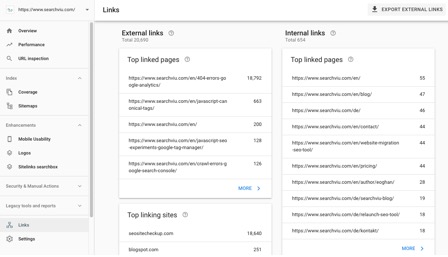
An essential tool for free backlink analysis for all website owners, regardless of experience level. This is a free service from Google that provides first-party data about how Google sees your website.
In the “Links” section, you can find out:
- Which pages receive the most backlinks?
- Who links to your site?
- Which anchor texts are used?
Although Search Console does not provide as deep backlinks analytics as paid services and is not suitable for competitor research, its value cannot be overstated: you get direct information from Google, which means you fully understand how the search engine evaluates your backlink profile.
This is a basic but reliable tool for backlink analysis in SEO, ideal for monitoring website status and identifying issues in time.
SEMrush
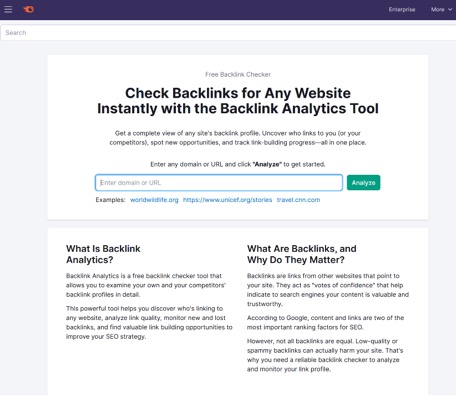
A multifunctional platform for SEO and content marketing that offers an advanced Backlink Analytics module.
Even in the free version, the service shows:
- The number of backlinks
- Referring domains
- Anchor texts
- Source authority
However, the main strength of SEMrush lies in its integration with other tools: you can analyze competitors, build a link-building strategy, and combine backlink data with information on keywords, rankings, and content performance.
In paid plans, the platform’s capabilities expand significantly, including deep toxic link audits and detailed reports for comprehensive SEO campaigns. SEMrush is especially valued by marketers and agencies for its versatility and ability to combine website backlinks analysis with other aspects of promotion.
In summary, which backlink analysis is better?
- If you need the most comprehensive backlink profile overview → choose Ahrefs.
- If your priority is working with first-party data and understanding how Google sees your website → Google Search Console is indispensable.
- If you want a universal tool that combines backlinks analysis with content marketing and SEO in a single ecosystem → SEMrush is the optimal solution.
How to Check Backlinks of a Website
1. Collect backlink data
Start by gathering as much information as possible from different sources. Use the tools mentioned above (Ahrefs, SEMrush) or similar link audit services to get a sample of backlinks. Additionally, connect Search Console to see data directly from Google.
It’s important to understand that no tool knows how to find all the backlinks of any website, so it’s better to combine several services to get a complete picture.
2. Evaluate quality and relevance
Backlinks differ not only in quantity but also in value. At this stage, you need to analyze backlinks:
- The authority of the donor domain;
- The topic and relevance of the content;
- The placement of the link on the page (in-text, footer, sidebar);
- The type of link: follow, nofollow, sponsored, or ugc;
- Whether the referring page is indexed;
- Whether it contains too many outbound links;
- Whether it matches the language and region of the target audience.
3. Analyze backlinks’ anchor texts
Anchor text is an important signal for search engines. Its distribution should look natural. In a healthy backlink profile, branded, URL-based, and generic anchors dominate, while an excessive share of exact-match keywords may look manipulative. It’s also essential to remember technical details: for image links, the alt text is considered the anchor. Analyzing backlink profiles and anchors helps identify imbalances and adjust your strategy in time.
4. Compare with competitors
To evaluate your position within the niche, it’s useful to compare your backlink profile with those of competitors. Tools like Ahrefs and SEMrush allow you to perform a Link Gap Analysis, identifying donors that link to competitors but not to you.
This backlinks audit helps you:
- Discover missing opportunities.
- Understand backlink growth dynamics in your industry.
- Adjust your promotion strategy accordingly.
5. Identify growth points and mitigate risks
The final step is to define actions based on the backlink data analysis. This may include:
- Handling harmful or spammy backlinks (removing them or, if necessary, using the Disavow Tool).
- Recovering lost backlinks.
- Adjusting the anchor text list.
- Developing a strategy to gain links from more authoritative and relevant domains.
Conclusion
In the era of AI and next-generation search algorithms, success belongs not to those who collect the most links but to those who build the right connections.
A high-quality backlink profile today is a signal of trust for search engines and a pass into high-visibility areas, including AI blocks and the top of organic results.
Regular backlinks analysis becomes a strategic growth tool: it helps you understand which resources truly contribute to your authority and which ones are dragging your site down.
In the SEO of the future, winners are those who work precisely and thoughtfully, creating a network of backlinks capable of withstanding any algorithm changes.
 ChatGPT
 Perplexity
 Claude
 Google AI Mode
 Grok
Grok