Sign Up

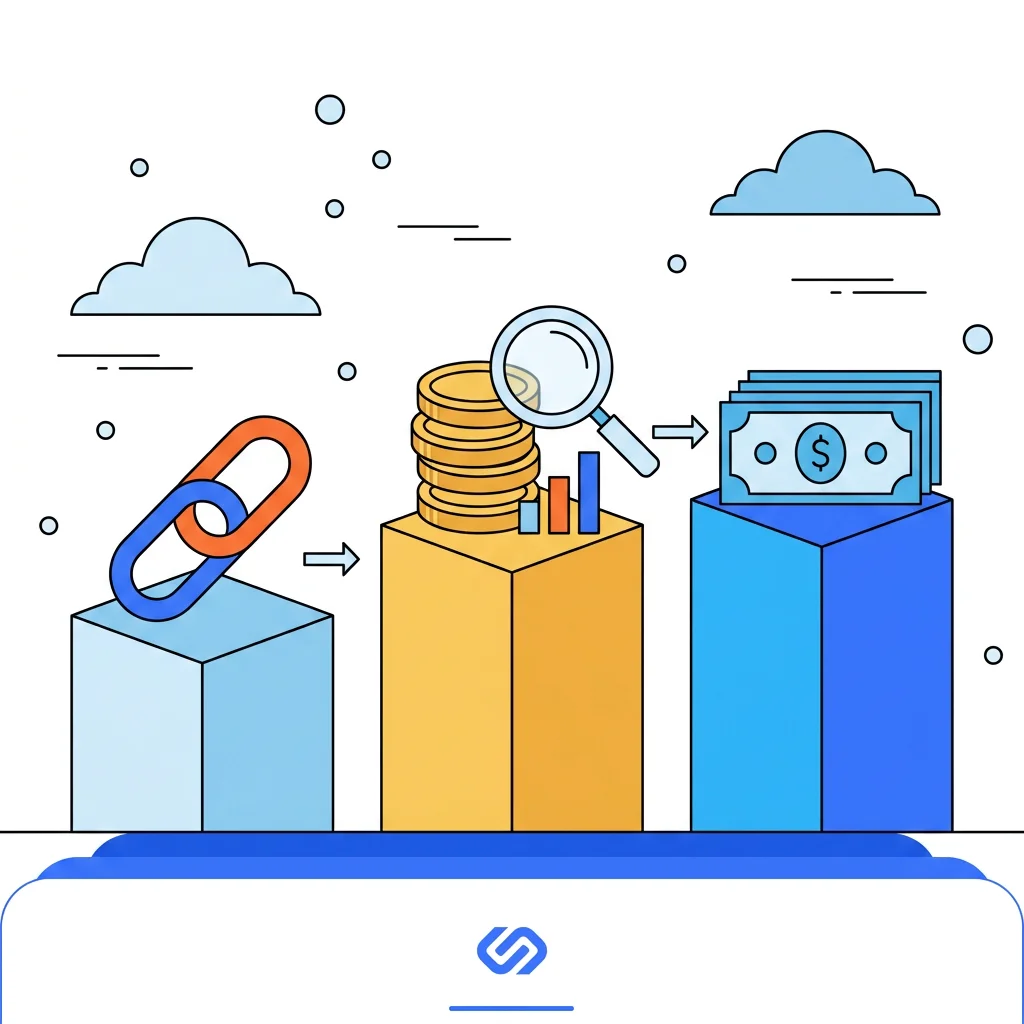
That’s the essence of tiered link building. In practice, it’s less about quantity and more about control. Each layer multiplies both reward and risk. Done right, it makes strong backlinks stronger; done poorly, it leaves a footprint Google can detect instantly.
So, what is tiered link building really? It’s a balancing act — amplifying link equity without touching your main site directly. Strategic layering, not reckless stacking, built around your brand’s tolerance for risk.
Strategic Fit: When It Makes Sense
Not every project deserves a complex, leveled structure. For high-visibility brands, risk control outweighs the benefit. But for growth-driven projects where speed matters more than legacy, tiered backlinks can play a role.
The model fits well when:
- You’re pushing new content in a highly competitive niche.
- You’ve already secured a few solid backlinks from reputable sources.
- Your SEO goal is to accelerate ranking movement without inflating spend.
- You can monitor link health across layers.
It’s less suitable when:
- Your content lacks depth or authority.
- The brand’s risk profile is low-tolerance (finance, healthcare, legal).
- You don’t have internal capacity for link tracking and cleanup.
From a managerial perspective, think of tier link building in SEO as a performance enhancer, not a safety net. It doesn’t replace good backlinks or content quality; it amplifies them temporarily. The goal is to use it tactically, not habitually.

A smart executive should evaluate three signals before approving such a campaign:
- Cost-to-impact ratio — does this move rankings faster than standard outreach?
- Reputational exposure — what happens if one layer gets penalized?
- Exit path — can the structure be dismantled without harming the top level?
Controlled Implementation Framework
This is where most teams fail — in execution. The key to safe tier link building is consistency, separation, and patience. No shortcuts.
Tier 1 — The Core Layer
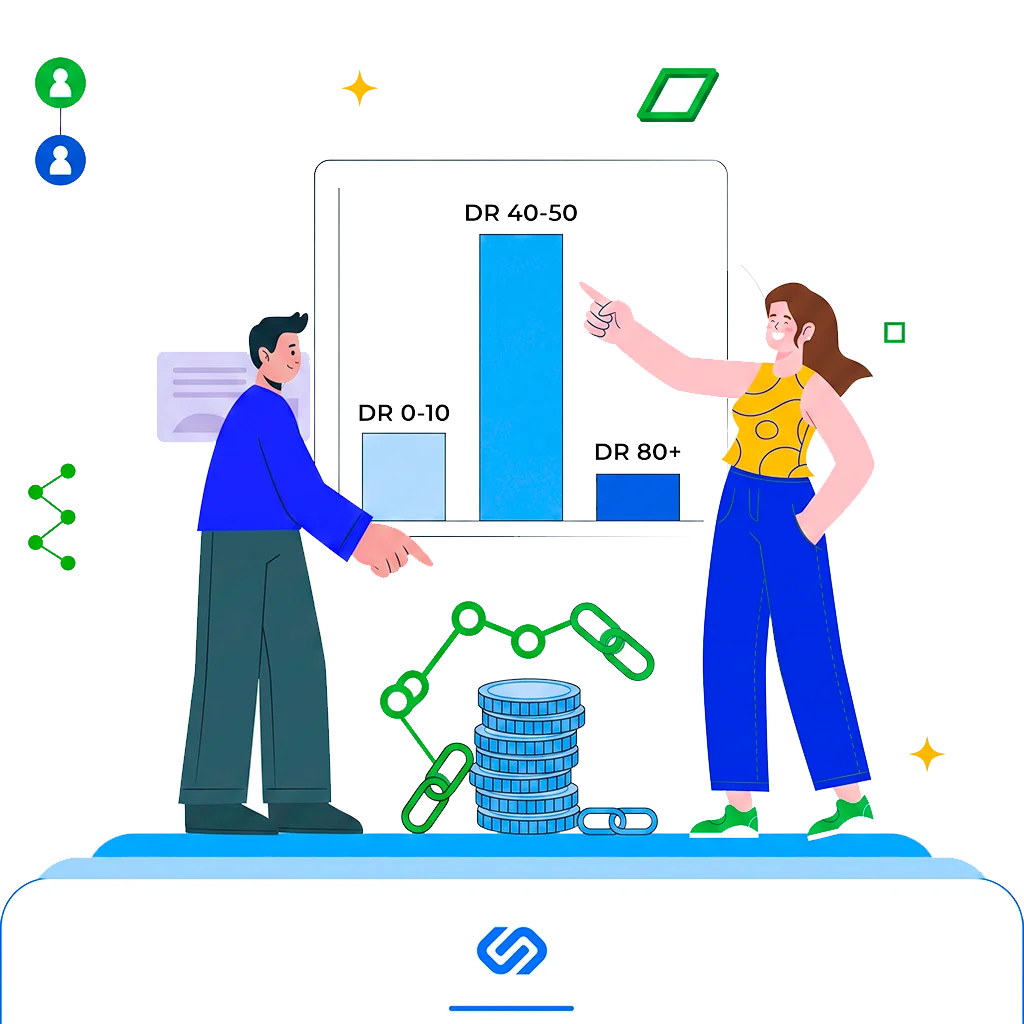
These are your premium assets. Editorial placements, guest features, high-DA niche mentions — links that can stand on their own. Don’t point spam at them. Don’t mass-produce. The fewer, the better. Each Tier 1 link should be relevant, contextual, and stable. If you wouldn’t show it to a Google engineer during an audit, it doesn’t belong here.
Tier 2 — The Amplification Layer
This is where most of the operational work happens. Tier 2 links connect to your level 1 pages, acting like reinforcements. Think of them as small amplifiers feeding power upward. They can come from Web 2.0 articles, Q&A platforms, or secondary guest posts. The key here is diversity — not 100 links from one domain, but 20–30 links across different types of sources.
Maintain a moderate link velocity. Build slowly — no more than a few links per week to any single asset. You can use tiered link building tools for discovery, not automation. Manual placement still wins when you’re protecting your reputation.
Tier 3 — The Support Layer
Optional, but often useful for indexing. These links target your Tier 2 pages, not your main site. They help search engines crawl faster, which makes the upper layers more visible. Accept that most of these links will be low authority, and that’s fine. Keep them nofollow or neutral. The goal is activity.
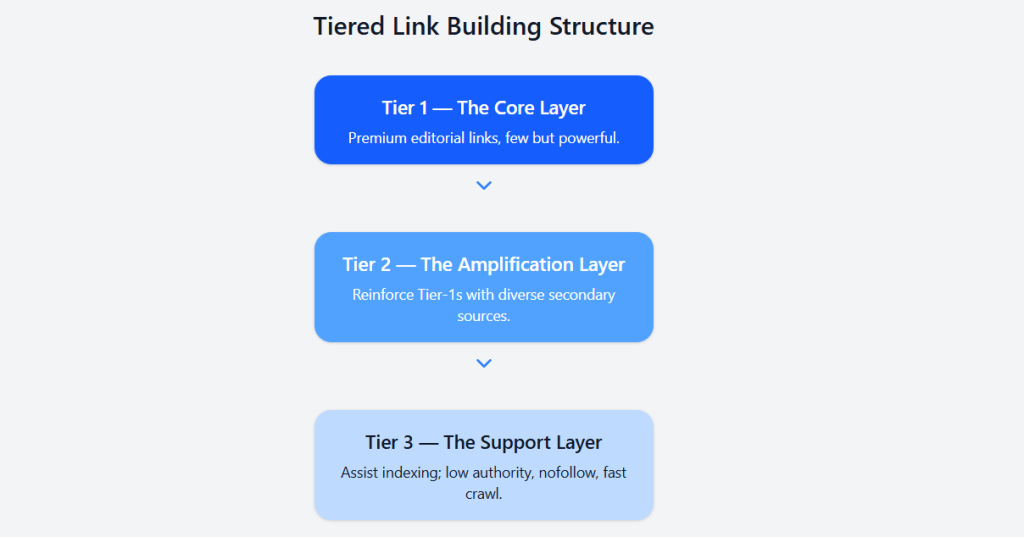
The entire framework depends on traceability. Keep a spreadsheet — URLs, anchor texts, status, and date of placement. This is your defense if anything ever goes wrong. Tiered linkbuilding is about documenting what you control and pruning what you don’t.
The Practical Side of Multi-Tier Execution
Most problems start when people overengineer the system. The temptation is to add more links, more levels, more velocity. But advanced tiered link building needs precision.
Timing and Pacing
New Tier 1 pages should rest before amplification. Wait at least a week before adding level 2 links, and another week before introducing level 3. This natural delay avoids sudden link spikes — the most common footprint trigger. Each link layer should grow gradually and appear organic over time.
Content Differentiation
Duplicate content kills authority faster than bad anchors. Each level should host unique material, even if the subject overlaps. Use varied tone, structure, and link positioning. Write differently across levels. The goal is to make every backlink tier look independently valuable.
Anchor Strategy
Tier 1 anchors must stay clean: brand names, naked URLs, or broad topics. 2nd level can mix partial and generic phrases to build context. Avoid over-optimized anchors entirely. For 3rd level, randomize completely or skip anchors altogether. If you repeat patterns, Google will connect them instantly.
Link Sources and Quality Control
Select link types that fit their role.
- Tier 1: guest posts, niche edit placements, media mentions.
- Tier 2: secondary blogs, web 2.0 networks, moderated communities.
- Tier 3: indexing sites, cloud document embeds, occasional comments.
Stay away from spammy platforms or expired domains with recycled content. Quality in lower ranks should decline gradually.
Technical Hygiene
Keep all connections segmented. Separate email addresses, accounts, and hosting when building multi-tiered backlinks. Never interlink levels within the same network. Keep your backlink map offline and encrypted. If an agency handles this, ensure every credential remains in-house.
Automation can assist, not lead. Tools like RankerX or GSA should only be used for tier discovery or indexing, not full builds. Once you let bots take over, you lose visibility into link quality, and the clean structure you built can collapse under its own footprint.
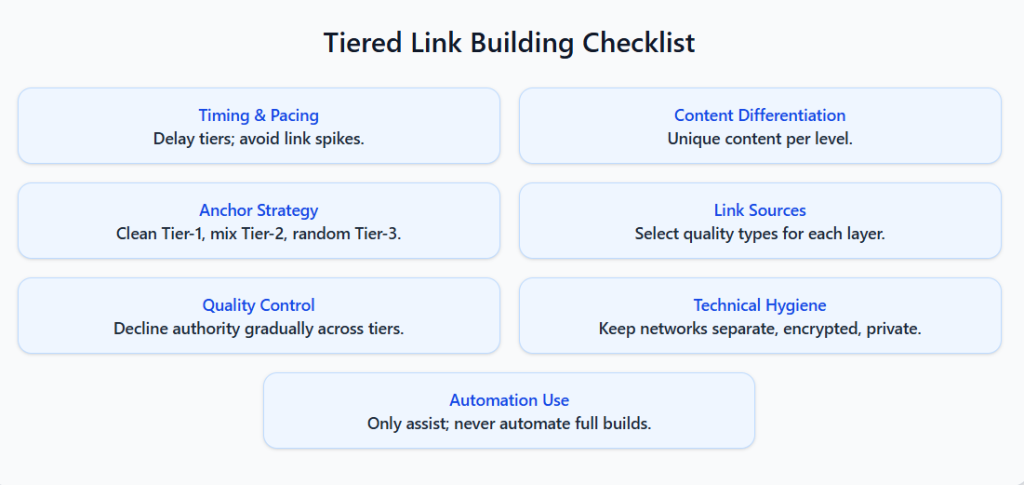
If you’re treating this as an operational campaign, assign ownership: one person per level. That keeps accountability and ensures human review before publishing. The point of tiered backlink building is to strengthen control, not outsource it to chaos.
Oversight and Metrics
You can’t manage what you don’t measure. Once a tiered link building strategy is live, create a simple performance dashboard. Executives need only five key metrics:
- Live ratio — how many links remain indexed.
- Referring domain health — no penalties or deindexation signals.
- Authority trend — movement of top pages in search visibility.
- Velocity balance — growth stays within the set pace.
- ROI indicator — organic traffic gain vs. campaign cost.
Run audits monthly for Tier 1 and quarterly for levels 2–3. Keep screenshots and URLs in a tracker. If a Tier 2 source gets flagged or deindexed, remove or replace its links. The value of a tiered system is flexibility — you can adjust without touching the core site.
Governance also means transparency. Whether you manage it in-house or through an agency, always demand verifiable data. Ask for lists, not promises. A well-structured tiered linkbuilding campaign looks like a pyramid on paper but operates like a tree: traceable roots, stable trunk, controlled growth.
Executive Conclusions
Tiered link building is a calculated experiment in controlled SEO growth. When managed correctly, it amplifies link equity and speeds up authority gains. But without structure and oversight, it quickly turns into noise that risks long-term visibility.
For executives, this is a short-term accelerator, not a foundation. It should support broader organic strategies while core assets mature. Once top backlinks start performing naturally, scale back the lower tiers and stabilize the profile. Start small, track weekly, and define a clear endpoint. Strong SEO leadership means knowing when to stop.
Transparency is essential. Every tier backlink should be traceable and documented, including the source, date, and content type. Build dashboards that monitor ROI, link health, and exposure.
Even the best tiered link building strategy fades over time. Lower layers decay, platforms vanish, and algorithms evolve. Keep Tier 1 links self-sufficient — earned placements and partnerships. Treat every lower level as replaceable scaffolding: temporary, structured, and safe to remove when the job is done.
 ChatGPT
 Perplexity
 Claude
 Google AI Mode
 Grok
Grok