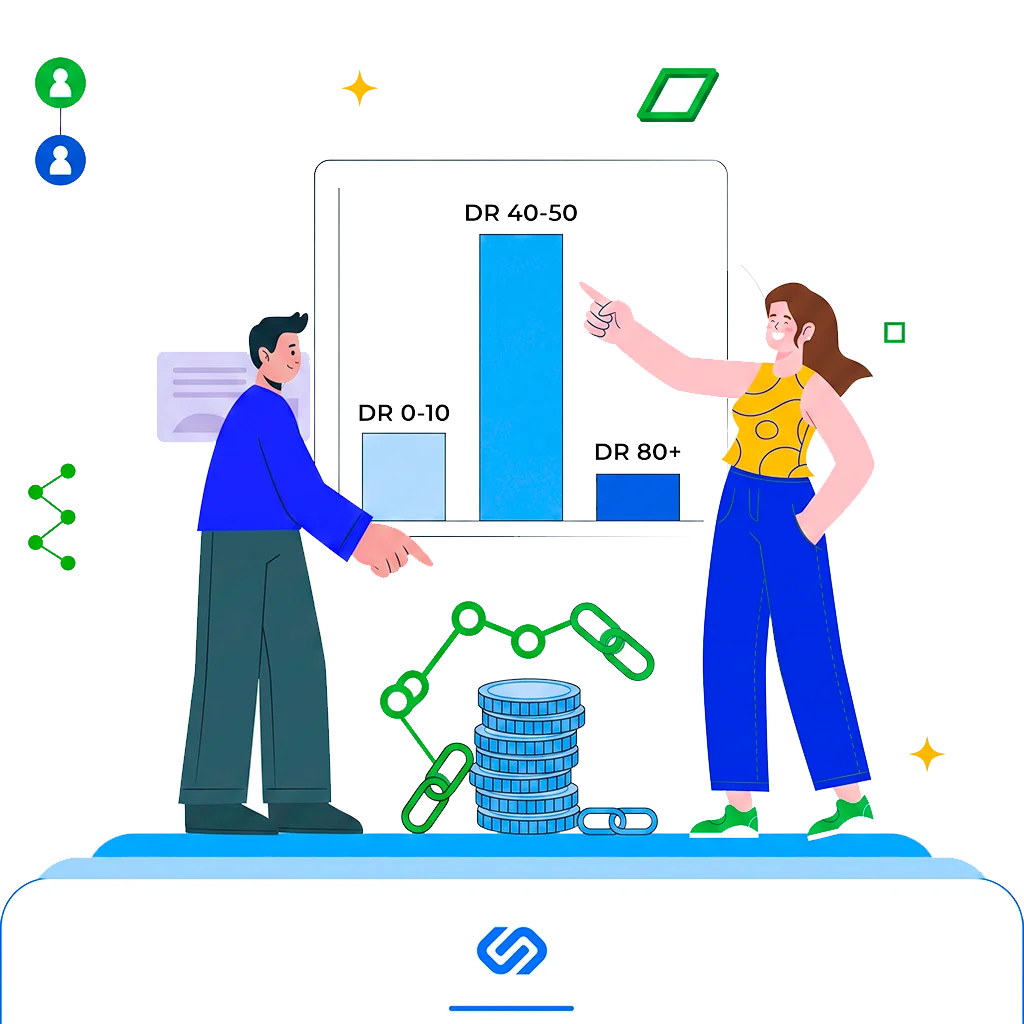
Sign Up


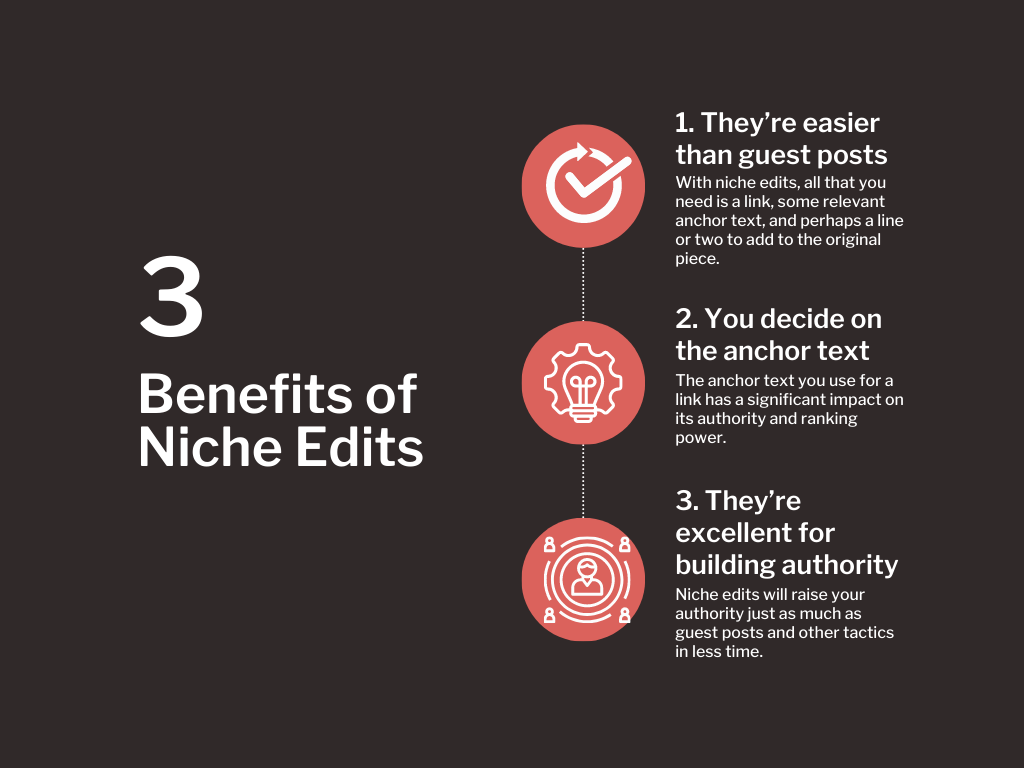
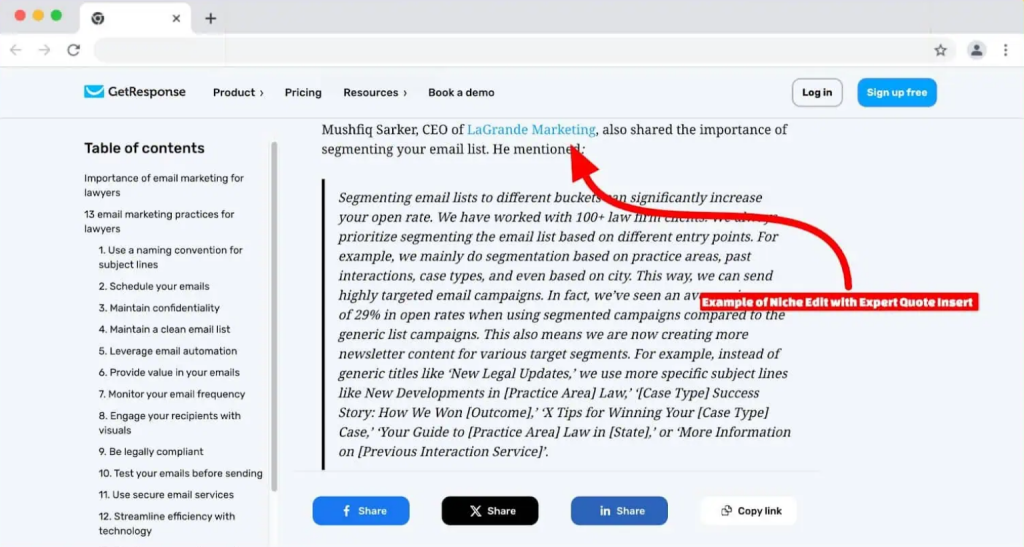
Niche edits are also called curated links, contextual link insertions, or in-content link placements. Because the link is embedded within the main body of a live article, Google treats it as a normal content update rather than a manufactured link-building effort, which makes it stronger than sidebar/footer links and more cost-efficient than guest posts.
The value comes from the fact that the hosting page is already trusted. For example, adding a link to a 2021 DR45 article that ranks for “email marketing strategies” transfers authority instantly, while a brand-new guest post starts from zero. In 2025, this speed advantage is why niche edit backlinks remain a core part of niche edit SEO strategies.
How Do Niche Edit Links Work?
Google continuously re-crawls aged pages. When a niche edit is added, the crawler treats it as updated content. If the placement is relevant and the host page is authoritative, the link passes PageRank during the next crawl cycle. This is why niche edit link building often shows ranking movement within days or weeks, compared to slower indexation on new content.
The mechanics rely on three factors:
- Authority transfer. Aged URLs usually have stable backlink profiles, so new links inherit stronger trust signals.
- Contextual relevance. Correct anchor text inside a semantically related paragraph strengthens keyword associations.
- Page quality. High-traffic, evergreen pages outperform low-quality link farms, which Google’s 2023–2025 Link Spam Updates can easily detect.
In practice, high-quality niche edit backlinks come from pages that are already ranking, have organic traffic, and contain fewer outbound links. Poor edits, such as automated insertions on expired-domain networks, AI-generated sites, or bulk-sold lists, are now quickly devalued. In 2025, Google’s SpamBrain models flag unnatural edits, especially when anchor text is over-optimized or placed in irrelevant content.
How to Build Niche Edit Backlinks
There are three reliable ways to build niche edit backlinks in 2025: manual outreach, buying through vetted marketplaces, or using a private network. The core principles are the same across all methods: focus on relevance, use natural anchor text, and place links only on real, indexed pages with stable traffic.
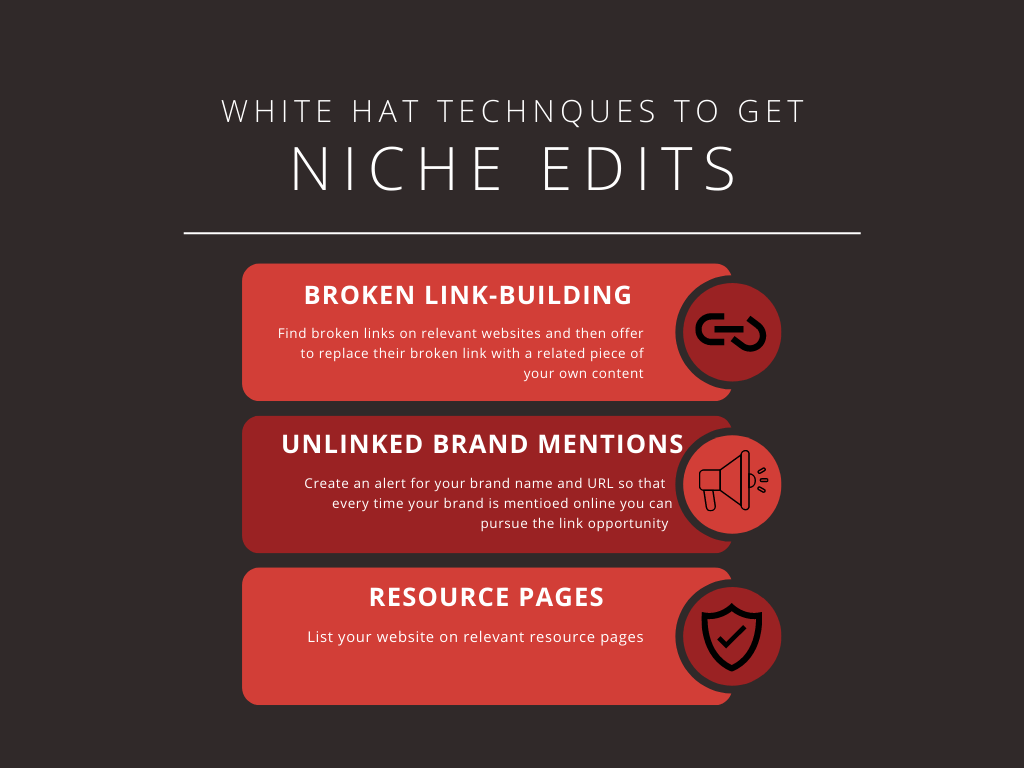
Manual outreach is the safest method and offers the highest editorial control. Start by finding aged articles ranking in the top 20–30 using Google operators like intitle:guide + “your keyword” or Ahrefs’ Content Explorer. Check that the page is indexed and gets real traffic. Use Hunter.io to find contact emails and send a short, value-driven pitch such as “noticed you mentioned X — here’s a more up-to-date resource.” Editorial fees usually range from $50–$150 per link, depending on DR and traffic.
Marketplace sourcing provides speed and access to large inventories. Reputable services like Authority Builders, Loganix, or Stan Ventures list domain metrics, traffic estimates, and sample URLs. Prices vary widely — DR40 placements often cost $70–$150, while DR60+ with strong traffic can reach $200–$300. The main risk is relying on overused vendor lists, which may create detectable link footprints.
The private network approach is used by agencies and advanced SEO specialists. It involves owning or partnering with multiple high-quality blogs where you can place niche edits internally. If the domains have real content and organic visibility, this method provides long-term control and predictable link placement without third-party dependencies.
How to Assess the Quality of a Niche Edit Backlink
Assessing the quality of a niche edit backlink requires examining traffic, relevance, and the health of the page, not just its DR. In 2025, Google’s link spam systems heavily devalue edits placed on low-traffic or repurposed domains, so verification tools are essential.
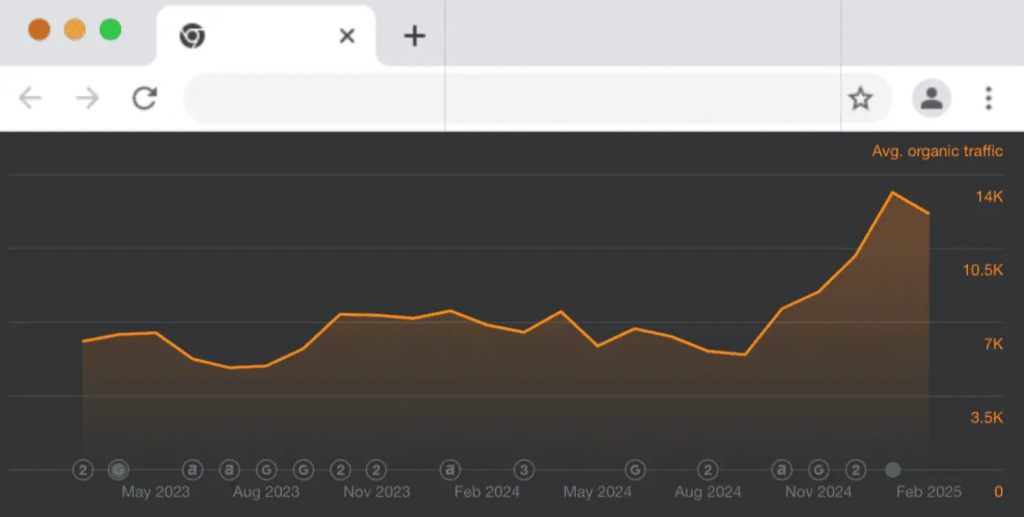
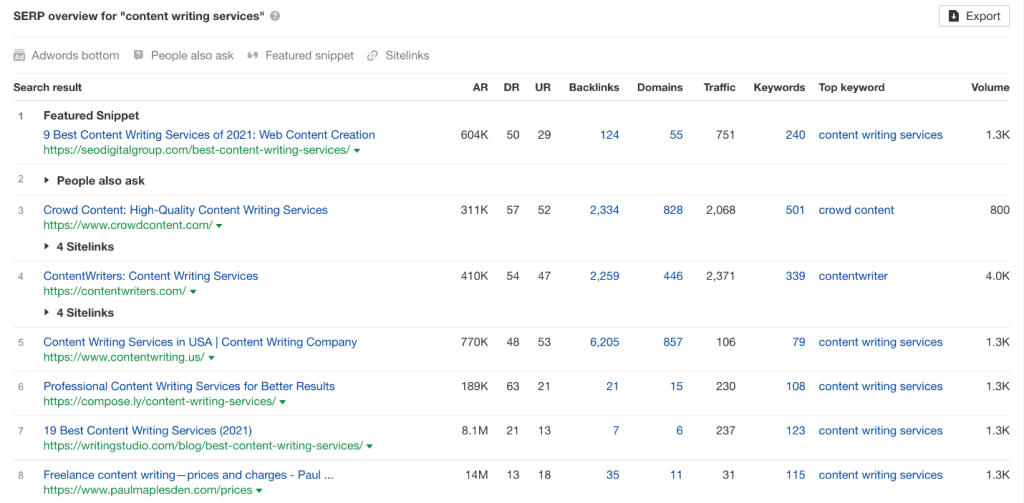
A reliable niche edit usually comes from a DR30+ site with at least 500 monthly organic visits. Traffic consistency matters more than authority scores. The target page should be topically aligned with your anchor text and at least 6 months old, which indicates stable indexation. Pages overloaded with outbound links (more than 40–50) provide weaker value and may signal manipulation.
Core checks include:
- Traffic & keywords — verify with Ahrefs or SEMrush.
- Relevance — anchor text must match the surrounding topic.
- Page history — confirm via Wayback Machine to avoid expired-domain spam.
- Index status — check with SEO Minion or IndexCheckers.
A strong niche edit is contextual, visible in the main content, naturally written, and placed on a real, active site with verified user traffic.
Common Pitfalls with Niche Edits (What to Avoid in 2025)
In 2025, the wrong type of niche edit can damage your SEO more than help it. Google’s algorithms are smarter and more aggressive at detecting manipulation. Poor-quality sellers, spammy domains, and over-optimized anchors are still the top mistakes.
Avoid these red flags:
- Buying from mass sellers offering 50+ edits for $100 — often found on Fiverr or low-tier marketplaces. These typically use expired domains, AI content, and auto-insert scripts.
- Overusing exact match anchor text, especially on commercial terms, increases your chances of a manual penalty.
- Links placed on pages with zero organic traffic and hundreds of outbound links carry no SEO value.
- Reusing the same domains across unrelated niches (e.g., linking a crypto tool from a cooking blog) creates clear irrelevance signals.
A bad niche edit may pass short-term juice, but long-term, it leaves a footprint. Once detected, these links are devalued or penalized, and recovering rankings takes far more time and cost than avoiding poor links in the first place.
Bottom line: If it’s cheap, automated, or irrelevant — skip it.
The Future of Niche Edits in Link Building (2025 Outlook)
Niche edits remain effective in 2025, but the bar is higher. Google’s updates prioritize authority, helpfulness, and topical relevance, meaning sloppy link insertions no longer work. Done properly, niche edits still outperform guest posts when placed on aged, high-traffic, contextually aligned pages.
Going forward, link value will depend more on intent alignment and content quality than domain rating alone. Pages that provide real value, have editorial oversight, and organic user signals are where niche edits thrive.
Key trends:
- Contextual relevance and anchor diversity will define safe link profiles.
- AI-generated content paired with niche edits is high risk unless heavily edited.
- Marketplace sellers will need to adapt to stricter quality checks and visible traffic metrics.
When integrated into a broader strategy, including original content, diversified anchors, and high-quality domains, niche edits still deliver strong ROI. But in 2025, it’s no longer about volume. It’s about precision, trust, and relevance.
 ChatGPT
 Perplexity
 Claude
 Google AI Mode
 Grok
Grok