Sign Up


Before paying an agency or approving an outreach campaign, ask one thing: does a GOV link directly serve the project’s goals — visibility, lead generation, or credibility? If not, it’s a distraction. The article below breaks down what defines a strong GOV link, how to find one that fits your strategy, and what mistakes drain budgets fast.
What Makes a GOV Backlink Valuable
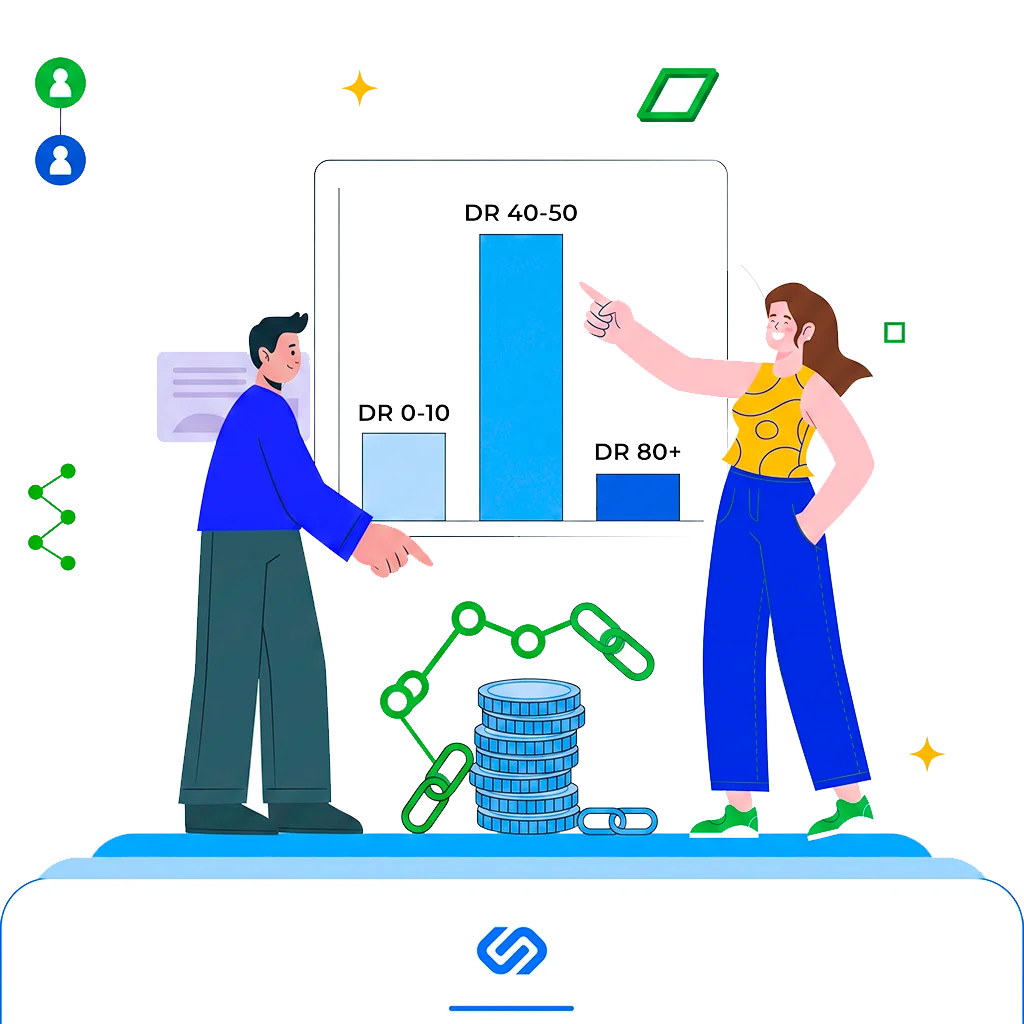
Not all government domains hold equal weight. Some run under national ministries with strong authority; others are small municipal sites barely indexed. A good GOV backlink is about context, relevance, and placement.
Checklist for a worthwhile backlink:
- The page is publicly indexed and stable.
- The anchor text fits naturally.
- The link sits inside body content, not a footer or PDF appendix.
- The site’s topic aligns with your business or content.
- There are a few external outbound links on that page.
- The referring domain maintains a clean backlink profile.
When those factors align, a GOV backlink can outperform a dozen random directories. If they don’t, it’s just a line of code sitting in an irrelevant document.
When to Invest in GOV Backlinks
There are clear scenarios where they make sense:
- You operate in YMYL sectors where trust is non-negotiable — finance, healthcare, law, or education.
- You target local or national visibility tied to official programs.
- You want to strengthen E-E-A-T signals for branded search queries.
- Your content provides genuine value to public users — guides, research, or safety information.
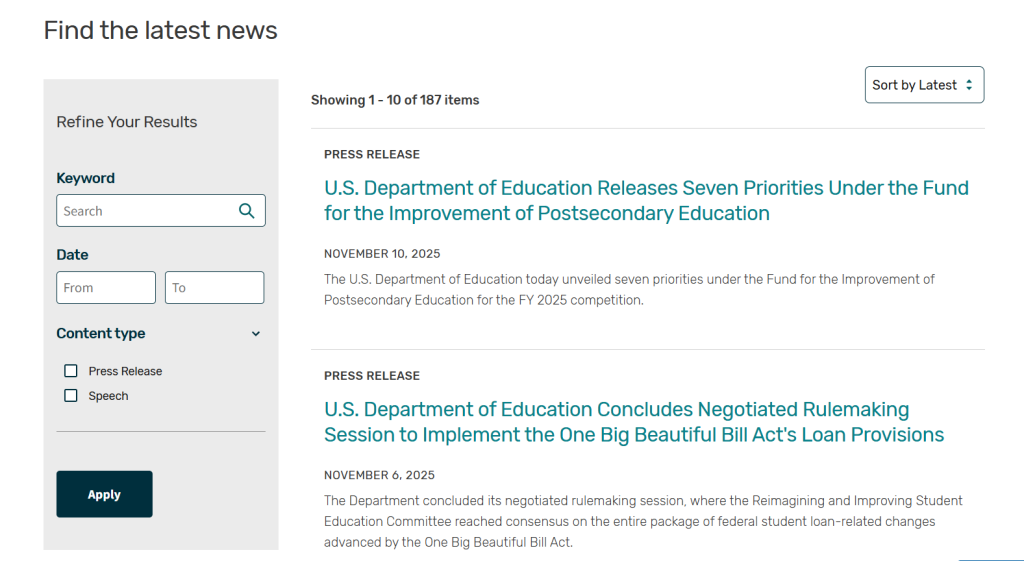
But sometimes, GOV backlinks don’t justify the cost. If your website lacks solid Tier-1 content or technical SEO, these links won’t compensate. Moreover, if you’re in a niche with zero overlap with public services, forcing a GOV reference will look manipulative.
Quick filter: If you can’t clearly explain to a public-sector webmaster why your resource helps their audience, the link won’t last.
How to Find GOV Backlink Opportunities
Forget “gov backlink generator” tools — they create more problems than results. Real opportunities come from targeted discovery.
Try this workflow:
- Use Google operators: site:.gov “resources” + your topic keyword.
- Scan the top 30 pages. Keep only those that list external links or reference guides.
- Analyze which of your pages could genuinely fit those resources.
- Prepare a short, factual pitch describing how your content complements theirs.
- Reach out to the listed webmaster.
You can also check where competitors earned GOV mentions using Ahrefs or Semrush filters — just search by domain type. It’s a fast way to learn which government entities already link to commercial websites. If one of them lists case studies, suppliers, or learning materials, your brand may also belong there.
Real Acquisition Channels
Let’s move beyond theory. Here’s where GOV backlinks usually come from and what it takes to earn them:
Resource and Partner Pages
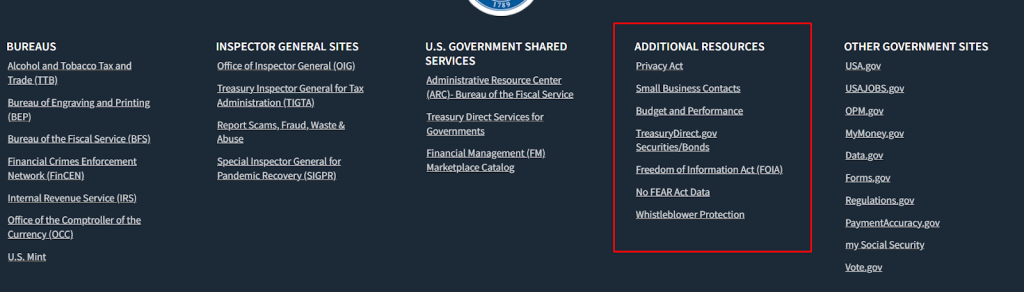
Government departments often publish “helpful resources” sections. Offer a non-promotional asset — e.g., a white paper, safety checklist, or calculator.
Local or State Programs
If you’re listed in an official city or regional business directory, that’s already a GOV backlink. Apply through verified forms.
Sponsorships and Events
Local governments credit partners of public initiatives — conferences, hackathons, community grants. Sponsor wisely, ensure a backlink from the event or partner list, and document it for compliance reporting.
Content Citations
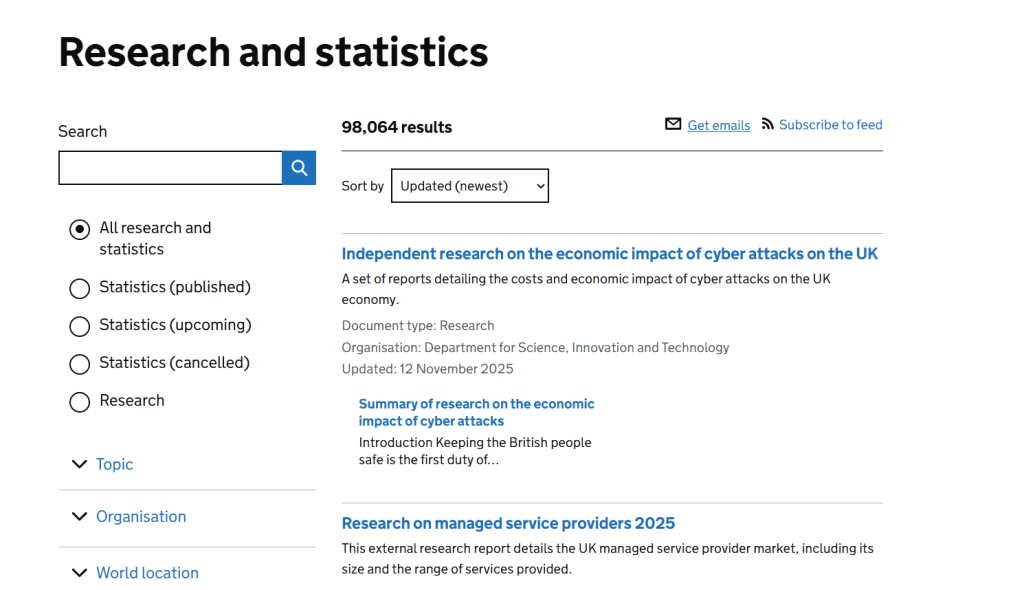
If you publish original data, even small-scale research, pitch it to government bodies that curate similar topics. For instance, environmental reports, public-health statistics, or cybersecurity guidelines.
Broken Link Replacement
Search for broken resources on GOV pages using a crawler. When you find a 404 that relates to your topic, suggest your content as a replacement.
Pricing Logic and ROI Considerations
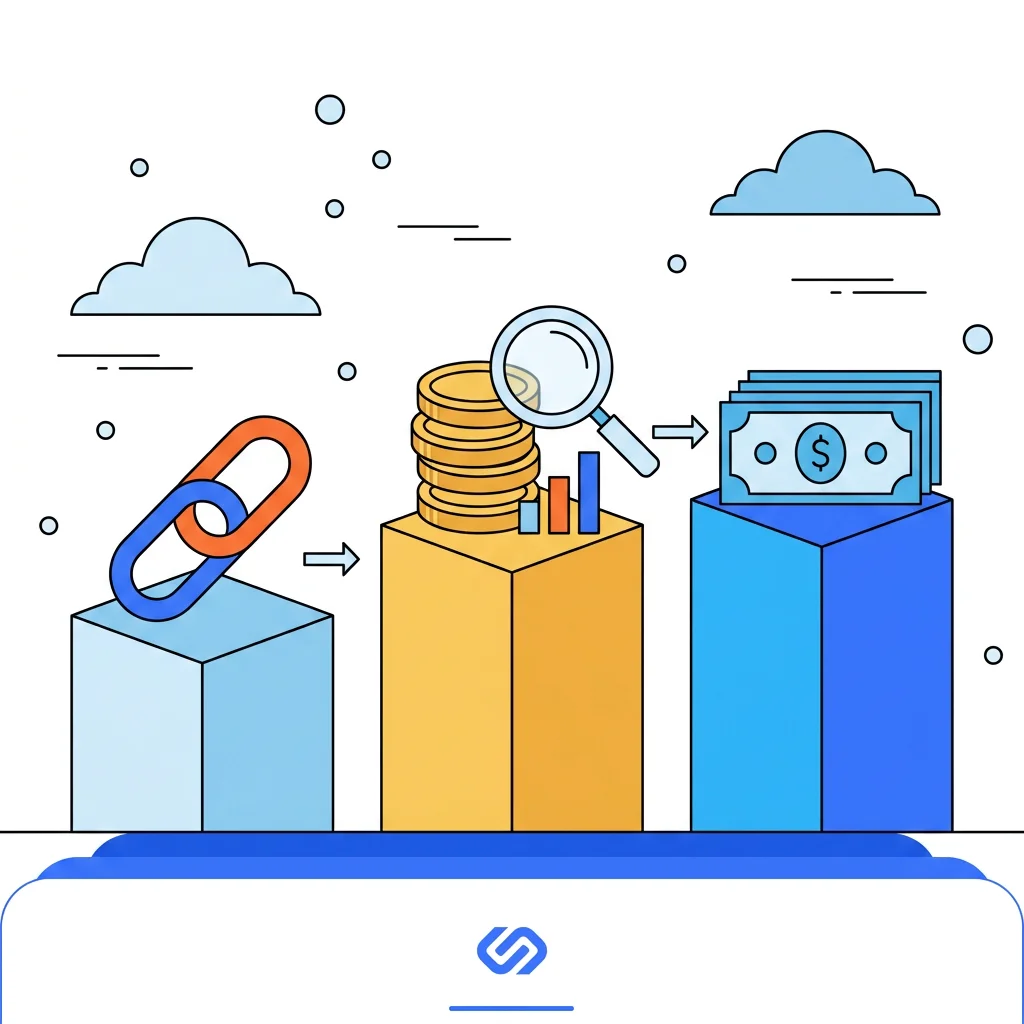
Every decision-maker eventually asks the same question: how much should a GOV backlink cost? There isn’t a fixed market price, because real ones aren’t sold. What you’re paying for is access and effort, not a placement.
Budget typically covers three parts: research, outreach, and the content or asset being linked. A genuine GOV mention might cost $500–$2,000 in effort, depending on your team’s efficiency. When an agency offers a “.gov link” for $30, assume it’s junk.
To evaluate ROI, calculate the projected traffic lift or trust impact from that single link. Use the same framework as paid media:
Expected clicks x Conversion rate x Avg. value per lead.
If the math shows a positive return within one to two quarters, proceed. If not, invest in content assets that can earn such links organically later. A GOV backlink only makes sense when it strengthens visibility and authority at once.
Risk and Compliance
Before any outreach, check legal and ethical boundaries. Government sites follow strict editorial standards. Any hint of manipulation, such as hidden sponsorships, SEO-driven content, or undisclosed payments, can backfire.
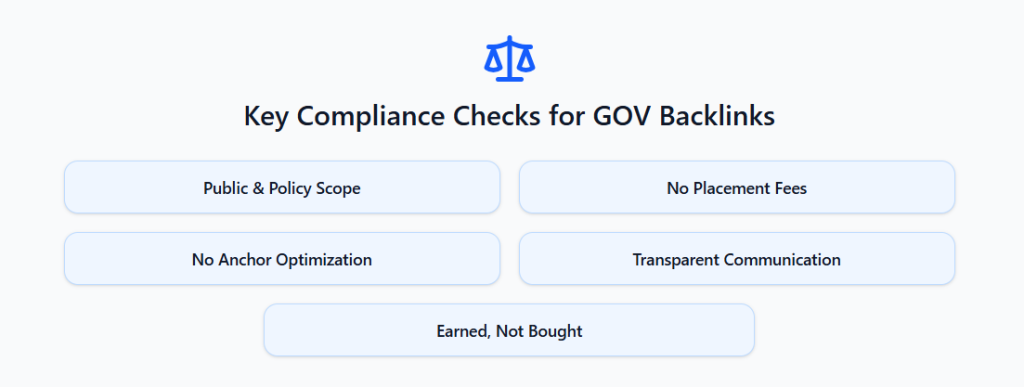
Key compliance checks:
- Make sure the page linking to you remains public and within the scope of their policies.
- Avoid requests that involve “placement fees.” That’s a red flag.
- Never suggest anchor text optimization or commercial CTAs.
- Keep communication transparent; treat the partnership like a PR collaboration, not a transaction.
Remember: buying or trading GOV backlinks violates search engine guidelines and can harm your domain. The correct approach is earned inclusion, not placement. If your partner insists on payment for linking, walk away.
Outreach and Communication Framework
The outreach must sound nothing like traditional link building. Government webmasters are immune to marketing speak. They respond to clarity, brevity, and relevance.
Structure your message like this:
- Subject: concise and specific — “Suggested update for [Department/Program] resource page.”
- Intro: who you are, what your organization does in one line.
- Value: one sentence explaining how your resource benefits their users.
- Evidence: mention credibility signals — certifications, awards, community initiatives.
- Ask: clear, polite, optional — “If it fits, please consider listing it here.”
Follow up once after two weeks, never sooner. If there’s no reply, move on. Government staff often require internal approval, so keep patience as part of your process.
Building a Scalable Process
To scale safely, treat this as a typical SEO crawl:
- Step 1: Build a GOV opportunities list filtered by topic, region, and relevance.
- Step 2: Prepare standardized outreach templates with small variable fields.
- Step 3: Assign compliance review for every outgoing email.
- Step 4: Track responses, update status weekly, measure outcomes quarterly.
Tools like Airtable or ClickUp can manage the pipeline better than email threads. You can also integrate a GOV backlink checker in your tracking sheet to monitor live status. Keep every outreach traceable — it matters during audits or when evaluating an agency’s claims.
Measuring Impact and Quality Control
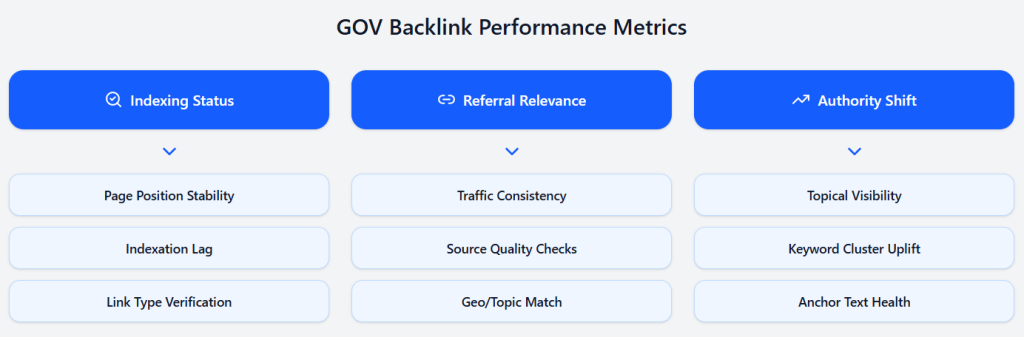
Once a GOV link goes live, the work isn’t done. You still need proof it performs. Track three core indicators:
- Indexing status — confirm the page is crawled and visible in search results.
- Referral relevance — monitor organic traffic spikes from that referring domain.
- Authority shift — watch for gradual increases in topical authority or visibility for related queries.
Use tools that can check GOV backlinks periodically — Ahrefs, Semrush, or any other that flags lost or noindexed pages. Manual validation still matters. Search the exact URL in Google; if it disappears, the link might have been removed or turned nofollow.
Internal Governance and Maintenance
Create an internal policy defining what qualifies as an acceptable GOV link. This keeps your team aligned and prevents impulsive buying. Include:
- Minimum relevance criteria;
- Mandatory content review before outreach;
- Ownership of outreach records;
- Audit frequency (suggest: every 90 days).
Automate reminders to recheck your GOV backlinks free tools often miss. One broken redirect can silently waste a high-authority asset.
Also, keep a “link register” — a document listing all GOV backlinks, their purpose, and responsible team members. It helps with continuity if staff or vendors change.
Strategic View for Executives
For leadership, GOV backlinks should be treated like brand partnerships. Those are not just SEO hacks. A single, relevant link from a national agency can validate your authority more than a hundred low-tier mentions. But random government URLs with no topical match add zero value.
Think of GOV domains as trust channels. You invest once, maintain visibility for years, and build a signal no algorithm update can easily replace.
For managers, the execution path is clear: vet sources, document outreach, track results. For executives, the responsibility is oversight — ensuring your SEO investments build durable credibility, not flattering metrics.
 ChatGPT
 Perplexity
 Claude
 Google AI Mode
 Grok
Grok