Sign Up


This article explains what broken link building is, how the mechanism works, and where it outperforms other acquisition tactics. You’ll see real scenarios where the method becomes a priority, followed by a precise step-by-step workflow, practical tools, and the main risks to keep in mind.
What Broken Link Building Is and How It Works
Broken link building means replacing outdated or dead external links with a relevant page you control. The site owner restores a missing resource, and you receive a contextual backlink that fits the page without forcing it. The process works as a small editorial exchange, and search engines respond well because it strengthens relevance and improves the reader’s path through the content.
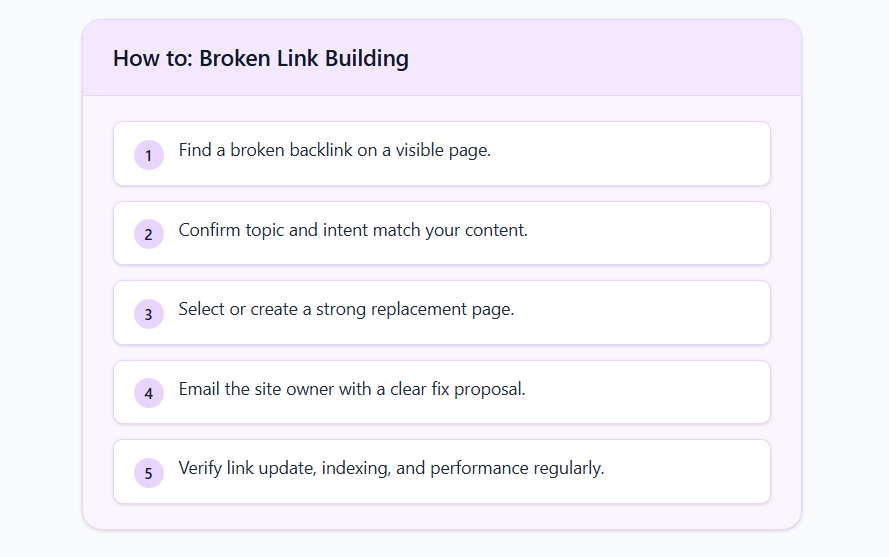
Here’s the simplified operational flow behind the method:
- Identify a broken backlink on a page with real search visibility or engaged traffic.
- Check whether the original target matches your topic and user intent.
- Choose or prepare a page on your site that can serve as a credible replacement.
- Reach out to the site owner with a clear explanation of the issue and a suitable alternative.
- Confirm the update once it’s added, ensure the page indexes properly, and monitor performance.
Broken link building works consistently because both sides gain something useful, and the update functions as natural upkeep of existing content rather than an artificial insertion.
When Broken Backlink Building Becomes a Priority
The method moves to the top of the list when specific conditions are present in your niche or within your link profile. Below are the scenarios where broken backlink replacement delivers the highest return.
- Industries with high content decay. Large content libraries frequently lose pages, creating predictable opportunities for replacements.
- Active competitors refreshing their profiles. Replacing dead citations helps close critical authority gaps without relying on outreach-heavy campaigns.
- Authoritative hubs with strict editorial rules. Some sites reject guest posts but accept corrections, making broken link building the only practical access point.
- Large evergreen archives in SaaS, fintech, or education. Older articles often contain high-quality dead links suitable for replacement.
- Long-tail relevance recovery. You can use broken link building strategies to find opportunities for long-tail keywords if the vanished pages originally targeted narrow topics with clear intent.
- Domains with limited placement options. If paid insertions or guest contributions are blocked, fixing dead links becomes the most compliant acquisition method.
These scenarios define where the method consistently outperforms traditional outreach and provides a stable, low-risk source of authoritative backlinks.
How to Do Broken Link Building — A Precise Workflow
Broken link building works only when the workflow is disciplined. The steps below show exactly how to do broken link building without wasting time on random pages.
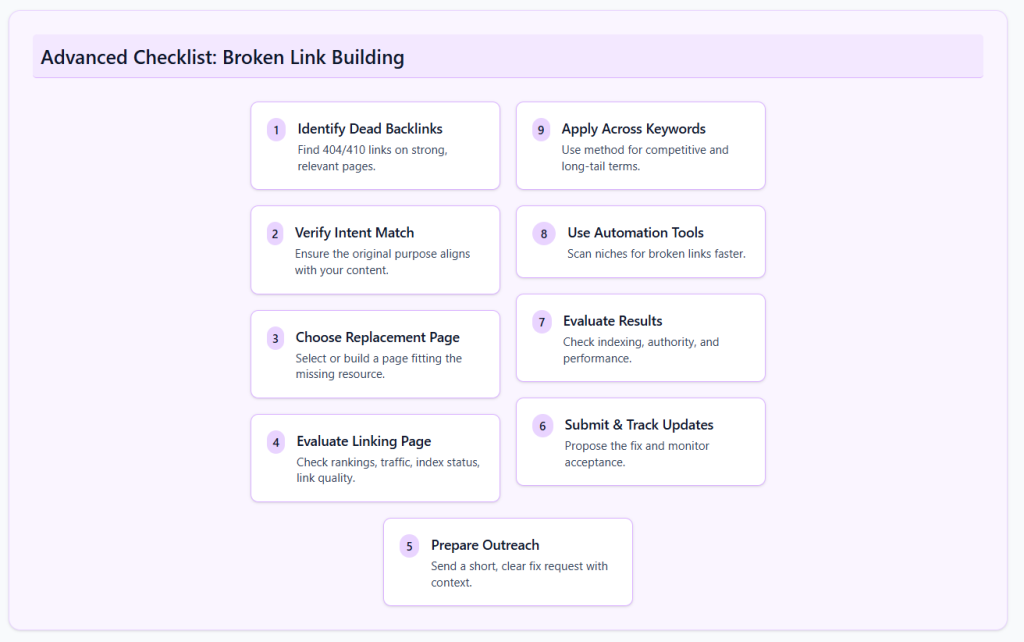
1. Identify High-Value Dead Backlinks
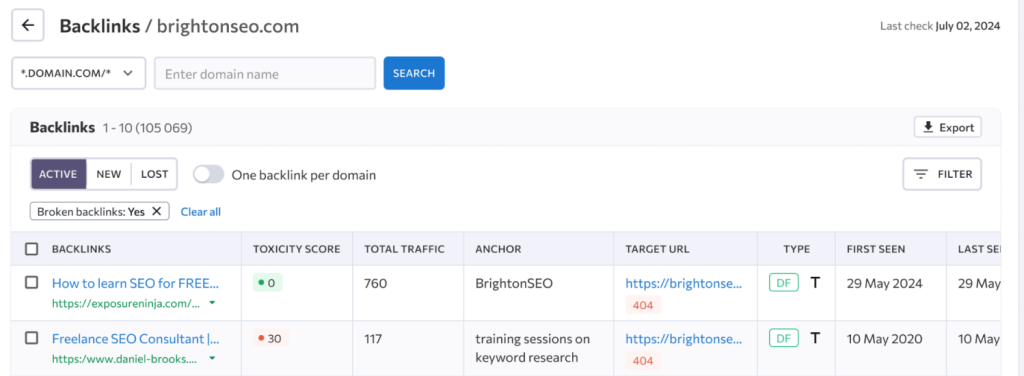
Begin by finding URLs that return 404 or 410 responses on credible, topic-aligned sites. This step sits at the center of any effective broken link building strategy. Use specialized tools to surface pages with dead outbound links across your target domains. Before moving forward, make sure the linking page attracts real visitors or ranks for anything meaningful. Many low-tier pages also contain broken URLs, but updating those links rarely delivers measurable value.
2. Verify Relevance and Original Intent
A dead link has value only if its topic aligns with your content. This is where broken link building SEO differs from generic backlink acquisition. Check how the original destination was used: Was it a definition? A guide? A data source? Replacements must satisfy the same intent. Avoid mismatches, because misaligned anchors weaken trust and reduce acceptance rates. Relevance determines whether the site owner considers your suggestion legitimate.
3. Map Your Best Replacement Page
Select a page on your site that can reasonably serve as the new destination for the removed resource. If nothing matches the original intent, build or refresh a page so the fit is clear. This step sits at the core of any effective broken link building method. The replacement has to add real value to the host page; weak matches are usually ignored. Even small improvements like updated facts, tighter structure, or stronger sources raise the likelihood of approval.
4. Run Quality Checks on the Linking Page
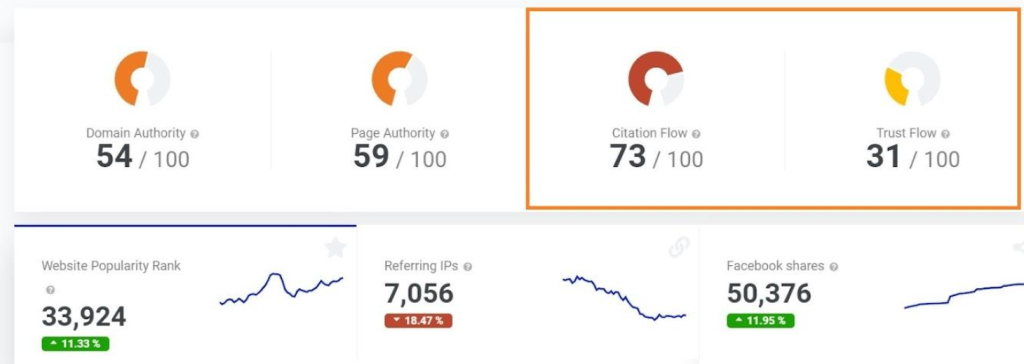
Not all linking pages are worth pursuing. Before outreach, confirm that the page ranks for anything meaningful and isn’t part of a low-quality cluster. This step is essential in every broken backlink building workflow. Pages with zero traffic or spam-like outbound patterns are unlikely to pass authority. A quick scan of internal linking depth and index status helps avoid wasted effort.
5. Prepare a Clean and Direct Outreach Message
The outreach message must be short and functional. Site owners appreciate clear communication: identify the dead URL, show the exact anchor, offer your replacement, and explain why the fix helps their readers. Avoid templates. High-quality correction requests outperform generic email blasts. The structure is simple: clarity, relevance, and benefit. This is the backbone of any broken link building techniques.
6. Submit the Replacement and Track Acceptance
When proposing the fix, include the replacement URL, recommended anchor, and a one-sentence rationale. After sending, track responses for a few weeks. Many editors update pages silently; others confirm changes manually. Add accepted assets to your broken link building guide or internal CRM for long-term reference. This step ensures no opportunity is lost due to a lack of follow-up.
7. Document the Results and Evaluate the Links
When a link update goes live, verify that the page indexes correctly and assess its actual authority. This is the moment to judge whether your broken link building technique performs reliably in this niche. Strong outcomes signal that the workflow can be expanded. Weak returns mean the relevance filters need tightening. Keep notes on domains that consistently accept fixes — they often become dependable sources of broken backlinks as older content continues to age out.
8. Use Tools to Automate Detection and Prioritization
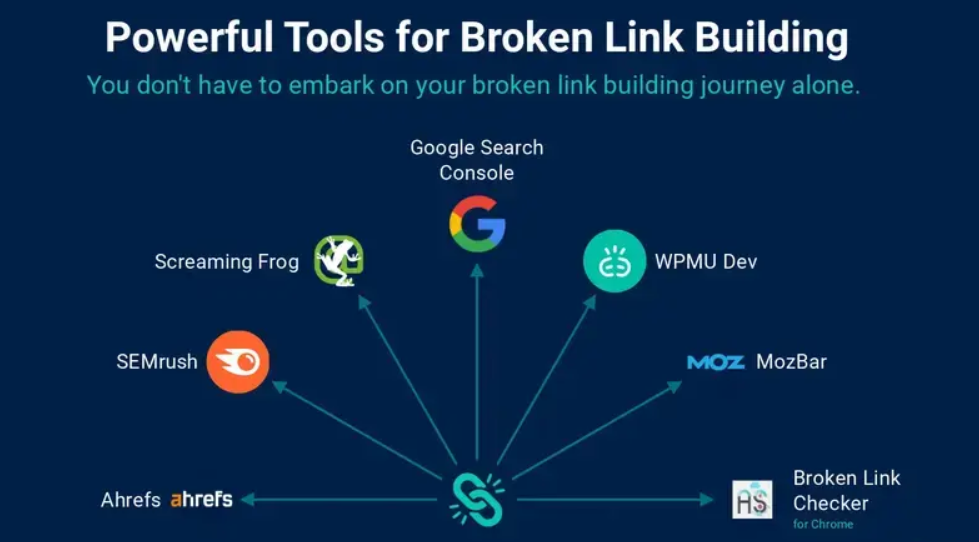
Automation is optional but effective. Mature teams use broken link building tools to continuously scan their niche. These tools surface pages that have recently lost resources, allowing you to act before competitors. The earlier you contact an editor, the higher the acceptance rate. Automation doesn’t replace manual verification; it simply accelerates discovery.
9. Apply the Method to Competitive and Long-Tail Keywords
Many teams ask whether broken link building strategies can support long-tail growth. The answer is yes. Look for dead pages that previously ranked for narrow queries and build replacements with deeper topical coverage. This approach speeds up relevance gains and helps recover abandoned search space.
Key Considerations, Risks, and Compliance Factors
Broken link building works reliably, but only when handled with controlled expectations and strict relevance. Some teams assume every broken URL is an opportunity; in practice, only a small share of pages deliver meaningful authority. Treat the method as precise maintenance, not broad outreach.
Operational limitations to consider:
- Some editors ignore correction requests regardless of relevance.
- High-authority pages often update slowly or require manual review.
- Replacement content must closely match the original intent, or it gets rejected.
- Excessive outreach with weak matches creates footprint issues.
Compliance and risk reminders:
- Avoid requesting updates on low-quality sites; weak sources dilute trust.
- Do not use automated outreach templates at scale. Editors flag them quickly.
- Never force a mismatched link: this is where the method becomes ineffective.
- Treat broken backlink replacement as an editorial fix, not a sales pitch.
Maintaining discipline across these points keeps the workflow safe, predictable, and aligned with search quality standards.
Final Takeaways
Broken link building succeeds because it improves the web instead of manipulating it. You restore relevance, recover lost value for the publisher, and earn a contextual backlink with clean intent. The method isn’t fast, but it is stable — and stability matters for long-term visibility. When relevance, timing, and editorial alignment come together, the results compound and hold.
 ChatGPT
 Perplexity
 Claude
 Google AI Mode
 Grok
Grok