Sign Up


Still, entrepreneurs need orientation. They need ranges and patterns that help them plan budgets. And that’s what this guide delivers: practical benchmarks that match real conditions, not abstract SEO formulas.
Understanding how many backlinks do you need to rank starts with one idea. You’re not trying to meet a global standard. You’re trying to match or outperform specific pages that already dominate your niche. This is the part most beginners overlook.
Why There’s No Single Number (But You Still Need One)
Search results differ drastically between industries. A local cleaning service competes in a completely different world than a fintech SaaS company. One may need just a handful of solid links. The other may need dozens before anything moves. The number of linking domains grows faster in competitive markets because all players invest heavily.
Even so, having a benchmark helps. Business owners want an estimate, not ambiguity. They want to know how many backlinks is good for their current stage. A range is better than a guess, and a range helps avoid overspending.
Your actual need depends on niche strength, SERP type, and the authority of the pages above you. That’s why there is no universal rule. But there is a practical way to calculate it, and we’ll walk through that next.
Start With Keyword Difficulty: How Competitive Is Your Space?
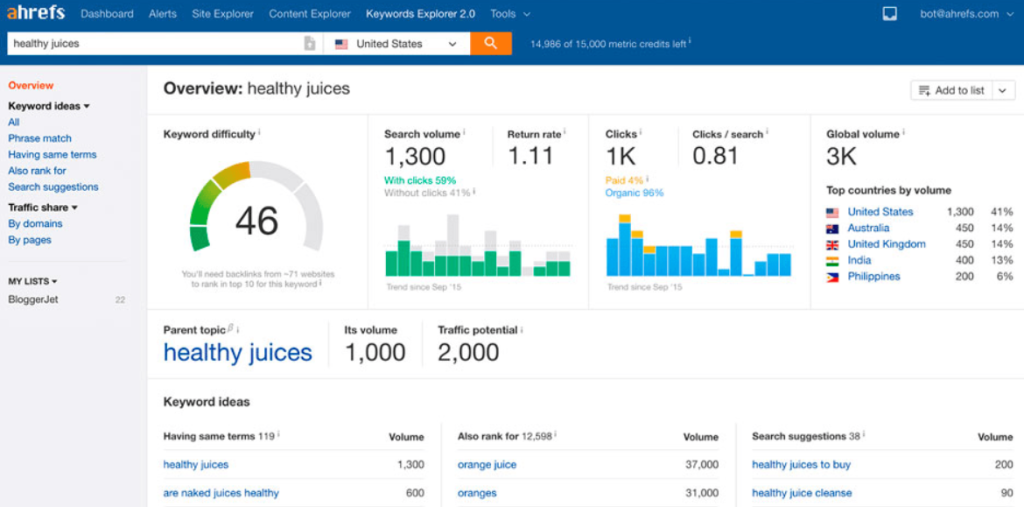
Keyword difficulty (KD) can seem intimidating, but the idea is simple. It measures how strong the current top-ranking pages are. When the top 10 consists of weak blogs or outdated articles, the opportunity is wide open. When the top 10 is filled with large brands, major publishers, or product-led pages, the path becomes steeper.
- For low-competition terms, 0–10 links from unique domains are sometimes enough.
- Medium-competition topics may require 20–50 quality references.
- Hard keywords can easily demand 70–150 linking domains.
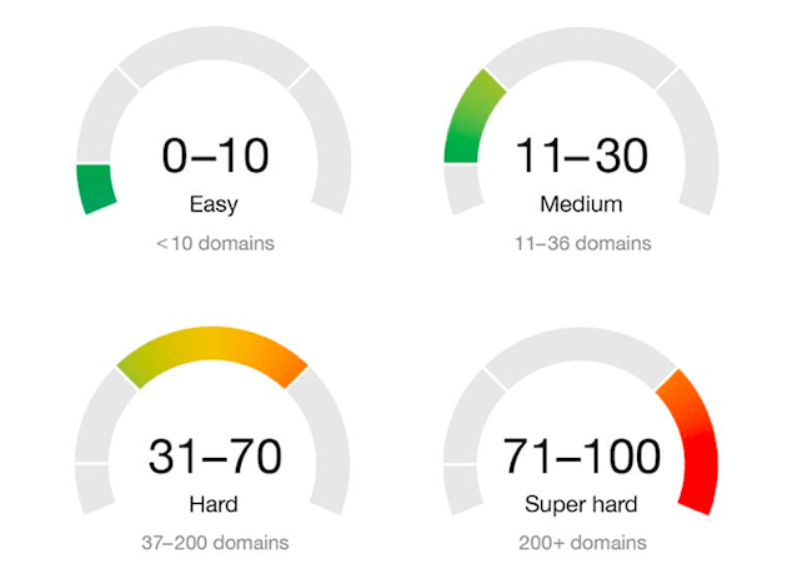
These are not theoretical ranges — they reflect real outcomes across thousands of campaigns.
Understanding these levels helps you estimate the number of backlinks a website should have to compete within a specific niche. It’s not about hitting an exact value. It’s about understanding what others have already built and how far you need to go.
Look at Your Competitors First (Not Generic SEO Advice)
The fastest way to determine backlinks needed for your website is simple: study the pages you want to outrank. Competitor analysis gives you real numbers based on actual performance. No guesswork.
- Start by checking the referring domains for the top 3–10 results. Focus on domains, not raw links. Raw backlink counts are noisy and misleading. You want to understand how many unique sites recommend their content.
- Then compare their strengths. Some won’t require much effort to surpass. Others will demand a longer, more structured campaign. When you know the benchmark, you can estimate the monthly backlink pace that feels sustainable and natural.
- This is also where pacing comes into play. Search engines prefer gradual patterns. That’s why many teams ask how many backlinks per day is safe. There is no universal answer, but we’ll clarify safe velocity later.
- Analyzing SERPs also helps with timing. Some industries can handle higher daily backlink volume without raising red flags because they naturally attract coverage. Others require moderation.
- Finally, consider long-term budgeting. Companies often want to know how many backlinks per month to set aside resources realistically. The right number depends on competition, link quality, and your business goals, not a random rule on the internet.
How Many Backlinks Different Page Types Need
Different pages play different roles. A homepage usually requires more links because it supports the entire brand, not just one keyword cluster. Service pages can rank with fewer but stronger references. Blog posts vary wildly: some succeed with a handful; others need dozens due to informational competition.
E-commerce category pages typically require mid-range counts because they target transactional intent. SaaS product pages may need more upfront because they compete with high-authority domains.
Each page type has its own dynamics. Understanding them helps avoid overspending and prevents spreading resources too thin.
Quality vs. Quantity: Why One Strong Link Often Beats Ten Weak Ones
Most business owners initially focus on volume, but that rarely produces results. What matters far more is topical relevance, editorial integrity, and the authority behind each placement. A smaller set of strong references can outperform large volumes of low-value signals.
Strong links appear naturally inside content where your topic fits. They come from pages with real traffic, not dead archives. That distinction is crucial. It explains why backlinks needed to rank often depend more on link strength than on sheer quantity.
The gap between weak and strong placements becomes clear in competitive niches. A single authoritative mention can shift a page several positions, while dozens of low-grade placements do nothing. This is why you must understand high-quality backlinks required before planning any campaign.
Set a realistic expectation: your goal is not to collect everything you can. Your goal is to collect what moves the ranking needle.
Safe Link Velocity: What Pace Is Natural?
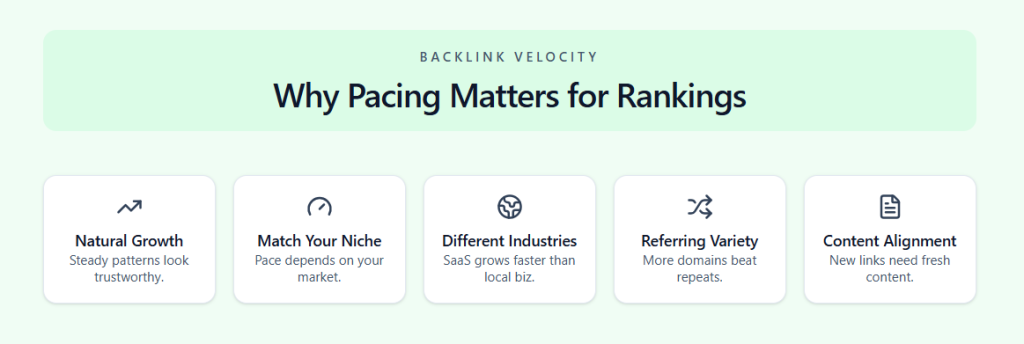
Velocity matters because search engines evaluate growth patterns. Sudden spikes from unknown sources look suspicious, especially when the site has no history of attention. A natural pattern grows steadily and aligns with your content or marketing activity.
- For most businesses, a moderate pace works best. It feels consistent and avoids red flags. Some founders seek a “magic speed” like a good daily backlink range, but no universal figure exists. Instead, match your pace to your niche’s competitiveness and your brand’s visibility.
- E-commerce and SaaS brands often gain links faster after launches or updates. Local service companies grow slower because their niches evolve differently. That’s why consistent pacing is safer than aggressive bursts.
- When planning growth, consider your context. Some companies look for safe monthly backlink growth guidelines, but those depend on market size. A global SaaS platform may grow ten times faster than a small local business and remain perfectly natural.
- You should also manage variety. Many beginners ask about backlinks from one website limit and worry about duplicate domains. Using the same domain occasionally is fine, but most of your progress will come from new referring domains.
- Finally, always align your pace with your publishing cadence. Trying to build links without new content creates an imbalance and slows progress.
How to Rank Faster With Fewer Links
Faster ranking isn’t always tied to volume. It often comes from matching search intent more precisely than competitors. If your page answers the query better, you need fewer references.
Strong internal linking also reduces external dependency. Pages supported by clear clusters require less external authority. This is especially helpful when you’re calculating backlink count you need to see early movement.
Another factor is SERP weakness. If the top 10 results lack strong authority, your page can outrank them with far fewer references. It’s common to see pages with a modest good backlink count outperform bloated, unfocused competitors.
Some pages also benefit from superior content depth. When the content solves the user’s problem convincingly, fewer external signals are required. This reduces the overall backlink total necessary for visibility.
Always examine the landscape before setting goals. It is the simplest way to avoid overspending.
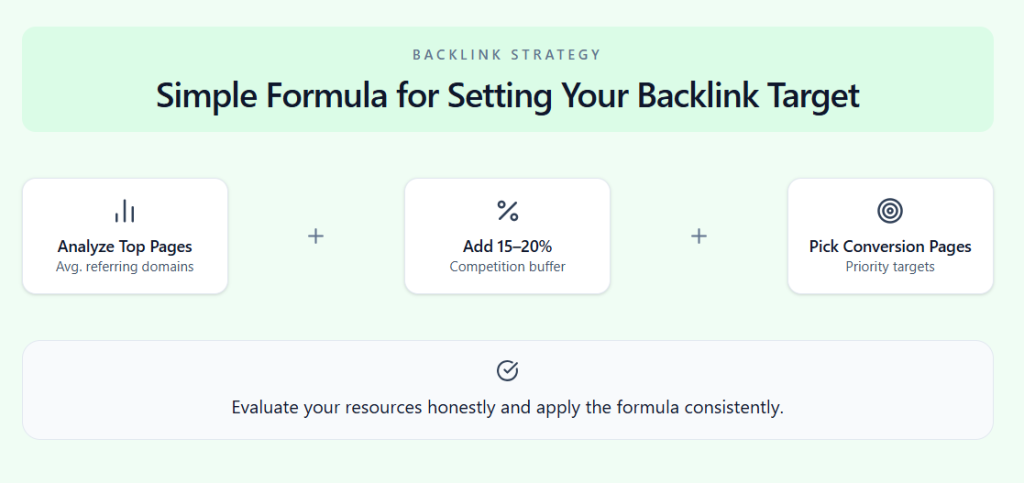
A Simple, Repeatable Formula for Setting Your Target
Start by analyzing the top pages in your niche. Identify the backlinks required for your site to rank by averaging their referring domains. Add a buffer of 15–20%. Then prioritize the pages that support conversions.
This approach also clarifies the backlinks needed to rank for each page type. It’s fast, repeatable, and easy to apply even for beginners.
Evaluate your resources honestly. Then execute consistently.
Final Action Plan for Business Owners
- Analyze your niche and its competitive intensity.
- Study the SERP leaders and calculate the backlinks needed for your website style benchmarks.
- Select the pages that drive revenue.
- Set targets based on the monthly backlink pace that feels organic.
- Build links steadily, avoiding inflated daily backlink volume expectations.
Conclusion
There is no universal link number for every business. What matters is alignment with your niche, competition, and your page’s real purpose. When you set targets based on context, not theory, backlink planning becomes predictable and effective.
 ChatGPT
 Perplexity
 Claude
 Google AI Mode
 Grok
Grok